LED Panel Lights for Commercial Drop Ceilings
JCE Lighting LED panel lights are slim, modern commercial ceiling fixtures designed for offices,
schools, hospitals, clinics, retail stores, conference rooms, corridors, and commercial buildings.
These LED flat panel lights provide clean, uniform illumination and are commonly used to replace
fluorescent troffers or older recessed ceiling fixtures in standard T-grid drop ceilings.
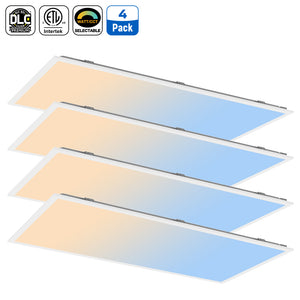
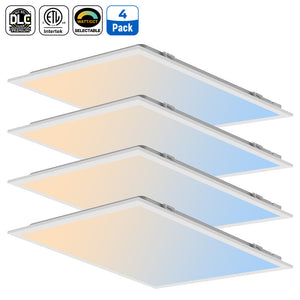
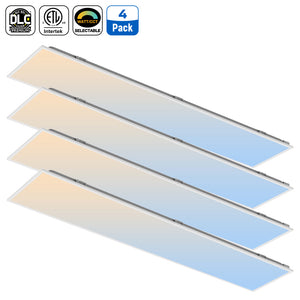
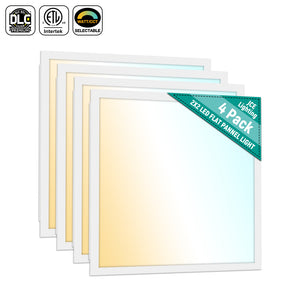
Choose from 1x4, 2x2, and 2x4 LED backlit panel lights with selectable wattage, selectable CCT,
0-10V dimming, 120–277V commercial voltage, DLC Premium and ETL listed options, sensor base
options, damp location ratings, and a 5-year limited warranty for professional lighting retrofit
and new-construction projects.
Uniform Flat Panel Lighting
LED panel lights deliver smooth, even illumination across the lens, making them a strong choice
for offices, classrooms, healthcare spaces, retail areas, and general commercial interiors.
Selectable Wattage & CCT
Field-selectable wattage and color temperature help contractors adjust brightness and light
color on site without stocking multiple fixture models.
DLC Premium / ETL Options
DLC Premium and ETL listed LED panels support commercial project specifications and may help
eligible installations qualify for local utility rebate programs.
How to Choose the Right LED Panel Light
The right LED panel depends on ceiling grid size, lumen output, wattage, color temperature, dimming,
emergency lighting needs, mounting method, and whether the project is replacing fluorescent fixtures
or specifying new commercial lighting.
| Selection Factor |
What to Check |
JCE Lighting Recommendation |
| Panel Size |
Confirm the ceiling grid size: 1x4, 2x2, or 2x4. |
Use 2x2 LED panels for tighter grid layouts and smaller rooms; use 2x4 LED panels for larger offices, classrooms, retail areas, and open spaces. |
| Brightness / Lumens |
Match lumen output to room size, ceiling height, and task level. |
Use lower wattage settings for corridors and general areas; use higher output settings for classrooms, clinics, offices, and task-heavy rooms. |
| Color Temperature |
Select CCT based on visual comfort and application. |
3500K–4000K is common for offices and schools; 4000K–5000K is popular for healthcare, retail, and task-focused commercial areas. |
| Dimming |
Check dimmer, occupancy sensor, and building control compatibility. |
Choose 0-10V dimmable LED panel lights for commercial lighting control systems. |
| Mounting Method |
Check whether the fixture will be recessed in a T-grid, surface mounted, or suspended. |
Use standard panels for drop ceilings; use a compatible surface mount kit or suspension kit when there is no T-grid ceiling. |
| Emergency Backup |
Confirm whether emergency egress lighting is required by the project plan. |
Use emergency backup panel lights or emergency drivers in corridors, exits, stair access areas, and code-required zones. |
| Rebate Eligibility |
Review local utility rebate requirements before ordering. |
Select DLC listed or DLC Premium LED panels where rebate qualification is important. |
1x4 vs 2x2 vs 2x4 LED Panel Lights
LED panel lights are commonly selected by ceiling grid size. The best option depends on the existing
drop ceiling layout, room dimensions, desired brightness, and the visual appearance required by the
project.
| Panel Size |
Best For |
Main Advantages |
| 1x4 LED Panel Lights |
Corridors, narrow rooms, small offices, retail aisles, and linear ceiling layouts. |
Slim linear appearance, good for replacing 1x4 fluorescent fixtures or adding light in tighter spaces. |
| 2x2 LED Panel Lights |
Offices, classrooms, clinics, meeting rooms, hallways, and smaller commercial rooms. |
Flexible spacing, balanced appearance, and strong fit for 2x2 T-grid ceilings. |
| 2x4 LED Panel Lights |
Large offices, classrooms, retail floors, healthcare spaces, and open commercial interiors. |
Higher lumen options, wider coverage, and fewer fixtures needed in many larger layouts. |
Backlit vs Edge-Lit LED Panel Lights
LED flat panels are commonly described as backlit or edge-lit. Backlit LED panels place the LEDs
behind the diffuser, while edge-lit panels direct light from the sides through a light guide plate.
For many commercial retrofit projects, backlit LED panel lights are popular because they provide
strong output, uniform light, and practical value for offices, schools, hospitals, and retail spaces.
| Panel Type |
How It Works |
When to Choose It |
| Backlit LED Panel Lights |
LEDs are positioned behind the diffuser to project light forward through the panel face. |
Choose for commercial projects needing bright, uniform, efficient lighting with strong value and reliable output. |
| Edge-Lit LED Panel Lights |
LEDs are positioned along the edges and light is distributed through a light guide plate. |
Choose when an ultra-slim profile is the priority and the project specifically requires edge-lit construction. |
Where to Use LED Panel Lights
Office Lighting
Use 2x2 and 2x4 LED panel lights in open offices, private offices, conference rooms, reception
areas, copy rooms, and administrative spaces for clean, uniform ceiling illumination.
School & Classroom Lighting
LED flat panels are widely used in classrooms, libraries, hallways, labs, and school offices
where bright, even, low-maintenance lighting is needed.
Healthcare & Clinic Lighting
Use LED panels in waiting rooms, exam rooms, corridors, offices, nurse stations, and non-critical
healthcare spaces where clean and consistent light is important.
Retail & Commercial Lighting
Flat panel lights provide bright, modern illumination for retail stores, showrooms, fitting rooms,
service counters, backrooms, and customer-facing commercial interiors.
Corridors & Common Areas
1x4 and 2x2 LED panels work well in hallways, lobbies, circulation zones, break rooms, and
building common areas that need safe, uniform illumination.
Retrofit Projects
Replace fluorescent troffers or older ceiling fixtures with LED panels to reduce maintenance,
improve light quality, and modernize commercial interiors.
LED Panel Lights vs LED Troffer Lights
LED panel lights and LED troffer lights are both common in commercial drop ceilings, but they serve
different design goals. LED panels offer a slim, flat, modern look with a broad luminous face. LED
troffers often use a deeper housing, lens, or center-basket design for controlled light distribution.
| Fixture Type |
Best Application |
When to Choose It |
| LED Panel Lights |
Offices, classrooms, retail spaces, clinics, corridors, and modern commercial interiors. |
Choose when the project needs a slim, clean, flat ceiling appearance with uniform light. |
| LED Troffer Lights |
Offices, schools, hospitals, laboratories, and commercial T-grid ceilings. |
Choose when the project requires a recessed fixture with a more traditional troffer form or controlled lens design. |
| LED Tube Retrofits |
Existing fluorescent fixtures where the housing is still in good condition. |
Choose when the lowest-cost retrofit is replacing lamps rather than the full fixture. |
| LED Wraparound Lights |
Surface-mounted applications such as garages, utility rooms, corridors, and low-ceiling spaces. |
Choose when there is no drop ceiling and a surface-mounted ceiling fixture is preferred. |
Mounting Options for LED Flat Panel Lights
LED panel lights are most often installed in suspended T-grid drop ceilings, but many projects
also use surface mount kits or suspension kits when a recessed grid ceiling is not available.
Always confirm the compatible mounting accessory for the exact panel size and model.
-
Recessed T-grid mounting: Common for 1x4, 2x2, and 2x4 panels in commercial drop ceilings.
-
Surface mount kit: Allows flat panels to be installed on drywall or hard ceilings where no grid is present.
-
Suspension kit: Allows panels to hang below the ceiling for architectural or retrofit layouts.
-
Emergency backup driver: Supports required egress lighting when specified by the project.
-
Sensor base or controls: Helps support occupancy sensing, daylight harvesting, or energy-saving control strategies.
Recommended Light Levels and Layout Planning
Fixture quantity depends on room size, ceiling height, panel lumen output, fixture spacing, room
reflectance, and required foot-candle levels. A lighting plan or photometric layout is recommended
for offices, schools, healthcare facilities, and larger commercial projects.
| Application |
Common Goal |
Planning Tip |
| Open Offices |
Comfortable, even illumination for desk work. |
Use 3500K or 4000K and avoid over-lighting computer work areas. |
| Classrooms |
Bright, consistent lighting for reading, writing, and instruction. |
Use uniform spacing and dimming where presentation modes are needed. |
| Healthcare Spaces |
Clean, reliable light for waiting rooms, corridors, offices, and exam areas. |
Choose neutral white CCT and verify project-specific code requirements. |
| Retail Areas |
Clear visibility and modern ceiling appearance. |
Use higher lumen settings or closer spacing where product visibility matters. |
| Corridors |
Safe wayfinding and consistent brightness. |
Use 1x4 or 2x2 panels with lower wattage settings to avoid over-lighting narrow spaces. |
Benefits of Replacing Fluorescent Fixtures with LED Panels
- Modern flat appearance for offices, schools, healthcare, retail, and commercial interiors.
- Uniform light distribution across the panel face.
- Lower energy use compared with older fluorescent ceiling fixtures.
- Reduced maintenance because there are no fluorescent tubes or ballasts to replace.
- Selectable wattage helps contractors tune brightness after installation.
- Selectable CCT allows one fixture family to support multiple room types.
- 0-10V dimming supports commercial lighting control systems.
- DLC Premium options may help eligible projects qualify for utility rebates.
- Damp location rated options support approved indoor commercial environments.
Installation Notes for Contractors
- Confirm panel size, voltage, wattage setting, CCT setting, mounting method, and control requirements before installation.
- Disconnect power before removing old fluorescent troffers or ceiling fixtures.
- Set wattage and CCT before final installation when using selectable LED panels.
- Use 120–277V wiring only when compatible with the selected fixture model.
- Connect 0-10V dimming leads only to compatible commercial dimming systems.
- For sensor-base or control-ready models, confirm sensor compatibility before installation.
- For emergency backup models, follow all emergency wiring, test switch, and battery connection instructions.
- Use compatible surface mount or suspension kits when installing panels outside of a T-grid ceiling.
- Always follow local electrical code and use a licensed electrician for commercial installations.
Need Help Choosing LED Panel Lights?
Not sure whether your project needs 1x4, 2x2, or 2x4 LED panels, sensor base options, emergency
backup, surface mount kits, 5CCT selectable models, DLC Premium fixtures, or a specific lumen
package? Contact JCE Lighting for product selection, bulk pricing, and commercial project support.
Call: +1 718-688-9188
Email: Contact@jcelighting.com
LED Panel Lights FAQ
What is an LED panel light?
An LED panel light is a slim, flat commercial ceiling fixture that provides broad, uniform
illumination. It is commonly used in offices, schools, hospitals, retail stores, corridors,
conference rooms, and commercial drop ceilings.
What is the difference between 2x2 and 2x4 LED panel lights?
A 2x2 LED panel fits a 2 ft by 2 ft ceiling grid and is often used in smaller rooms or tighter
layouts. A 2x4 LED panel fits a 2 ft by 4 ft ceiling grid and is commonly used in larger offices,
classrooms, retail spaces, and open commercial interiors.
What is a backlit LED panel light?
A backlit LED panel places the LEDs behind the diffuser so light projects through the panel
face. Backlit LED panels are popular for commercial projects because they provide bright,
uniform output and strong value for drop ceiling applications.
Are LED panel lights the same as LED troffer lights?
They are similar because both are used in commercial ceiling applications, but they are not
always the same. LED panels usually have a slim, flat luminous face, while troffers often use
a deeper housing, lens, or center-basket design for controlled distribution.
Can LED panel lights replace fluorescent troffers?
Yes. LED panel lights are commonly used to replace fluorescent troffers and older recessed
ceiling fixtures in commercial drop ceilings. Confirm size, voltage, mounting method, controls,
and local code requirements before installation.
Can LED panel lights be surface mounted?
Many LED panel lights can be surface mounted with a compatible surface mount kit. This is useful
when the project has a drywall or hard ceiling instead of a suspended T-grid ceiling.
What color temperature should I choose for LED panel lights?
3500K and 4000K are common for offices, schools, and general commercial interiors. 4000K and
5000K are often used for healthcare, retail, classrooms, and task-focused areas where brighter
white light is preferred.
Are LED panel lights dimmable?
Many commercial LED panel lights support 0-10V dimming. Always check the product specifications
and confirm compatibility with the dimmer, sensor, or building control system.
Do DLC Premium LED panel lights qualify for rebates?
DLC listed or DLC Premium LED panel lights may qualify for certain utility rebate programs, but
rebate requirements vary by state, utility provider, fixture model, and project type. Always
check your local utility rebate program before ordering.
Where are LED panel lights commonly used?
LED panel lights are commonly used in offices, schools, hospitals, clinics, retail stores,
conference rooms, hallways, lobbies, classrooms, and other commercial interiors with drop ceilings.
Note: Final fixture quantity, mounting method, spacing, light levels, emergency lighting requirements,
and control strategy should be confirmed by a qualified lighting designer or licensed electrician
based on ceiling height, room size, photometric data, local electrical code, and required illumination levels.