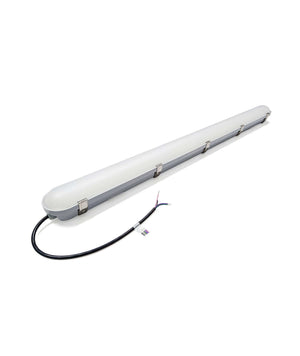
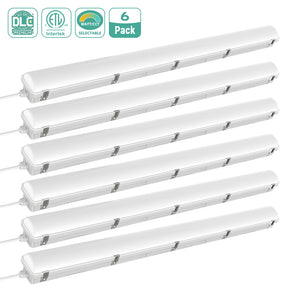
LED Vapor Tight Lights for Wet, Dusty & Harsh Locations
JCE Lighting LED vapor tight lights are sealed commercial fixtures designed for wet locations,
dusty spaces, damp environments, parking garages, car washes, cold storage rooms, food processing
facilities, warehouses, stairwells, tunnels, loading docks, utility rooms, and industrial work areas.
These vapor tight LED fixtures help protect the light source from moisture, dust, water spray, and
harsh everyday conditions where standard indoor strip lights or wraparound fixtures may not be suitable.
Available in 4ft and 8ft configurations, JCE vapor tight lights feature IP65/IP66 rated protection,
120–277V commercial input voltage, selectable wattage, selectable CCT, dimming compatibility, UL/ETL
listed options, DLC Premium options, and a 5-year warranty for professional retrofit and new-construction
lighting projects.
Wet Location Rated
Sealed vapor tight housings help protect against moisture, water spray, and damp conditions
in parking garages, car washes, cold storage areas, and industrial spaces.
IP65 / IP66 Protection
IP-rated vapor tight fixtures are designed to resist dust and water intrusion, making them
a strong choice for harsh commercial and industrial environments.
Selectable Wattage & CCT
Field-selectable wattage and color temperature let contractors adjust brightness and light color
on site without stocking multiple fixture models.
How to Choose the Right LED Vapor Tight Light
The right vapor tight fixture depends on fixture length, IP rating, lumen output, mounting method,
color temperature, dimming, emergency lighting needs, voltage, and the level of moisture, dust,
impact, or wash-down exposure in the space.
| Selection Factor |
What to Check |
JCE Lighting Recommendation |
| Fixture Length |
Measure the existing fixture or the area that needs coverage. |
Use 4ft vapor tight lights for standard rooms, aisles, walkways, and garages; use 8ft vapor tight lights for larger spaces, long rows, and higher lumen requirements. |
| IP Rating |
Check the level of dust, moisture, spray, and wash-down exposure. |
Choose IP65 or IP66 vapor tight fixtures for wet, damp, dusty, or harsh commercial locations. |
| Brightness / Lumens |
Match lumen output to ceiling height, spacing, task level, and safety needs. |
Use higher output settings for parking garages, car washes, warehouses, tunnels, and industrial spaces; use lower settings for corridors and utility rooms. |
| Color Temperature |
Choose CCT based on visibility, comfort, and application. |
4000K is a balanced commercial white; 5000K is popular for garages, car washes, warehouses, food processing, and task areas. |
| Controls |
Confirm dimming, occupancy sensor, daylight sensor, or building control compatibility. |
Choose 0–10V dimmable vapor tight lights or sensor-ready models where energy-saving controls are required. |
| Emergency Backup |
Confirm whether emergency egress lighting is required by the project plan. |
Use emergency backup vapor tight fixtures in parking garages, corridors, exits, stairwells, and code-required areas. |
| Certifications & Rebates |
Check UL/ETL, DLC, utility rebate, and project specification requirements. |
Select UL/ETL listed and DLC Premium vapor tight fixtures where safety compliance or rebate qualification is important. |
4FT vs 8FT LED Vapor Tight Lights
Both 4ft and 8ft LED vapor tight lights are used in commercial and industrial spaces. The best
option depends on fixture spacing, ceiling height, lumen requirements, and whether the project is
replacing old fluorescent vapor tight fixtures or designing a new lighting layout.
| Fixture Size |
Best For |
Main Advantages |
| 4FT LED Vapor Tight Lights |
Parking garage aisles, utility rooms, stairwells, car wash bays, food prep areas, cold rooms, workshops, and corridors. |
Flexible placement, easier handling, good for replacing many common 4ft fluorescent vapor tight fixtures. |
| 8FT LED Vapor Tight Lights |
Large parking areas, long warehouse aisles, tunnels, loading docks, industrial facilities, and larger commercial spaces. |
Higher lumen output, longer coverage, fewer fixtures needed in many large-area layouts. |
Where to Use LED Vapor Tight Lights
Parking Garages
Vapor tight LED fixtures are ideal for parking garages where lighting may be exposed to moisture,
exhaust, dust, vibration, and changing temperatures.
Car Washes
Use IP65 or IP66 vapor tight lights in car wash bays, detailing areas, vacuum zones, and service
spaces where water spray and humidity are common.
Cold Storage
Sealed LED vapor tight fixtures are well suited for walk-in coolers, cold storage rooms, refrigerated
warehouses, and temperature-sensitive commercial environments.
Food Processing
Vapor tight lighting helps protect fixtures in food processing areas, prep spaces, packaging rooms,
wash-down areas, and other moisture-prone facilities.
Warehouses & Loading Docks
Use vapor tight fixtures in dusty, damp, or semi-exposed areas such as loading docks, storage aisles,
maintenance zones, and industrial workspaces.
Stairwells & Corridors
Vapor tight lights provide durable illumination for stairwells, tunnels, hallways, utility corridors,
and building circulation zones that need reliable lighting.
IP65 vs IP66 Vapor Tight Lights
IP ratings describe protection against solids and liquids. For vapor tight fixtures, the first digit
describes dust protection and the second digit describes water protection. Higher water-protection
ratings are useful when fixtures may be exposed to stronger water spray or harsher wash-down conditions.
| Rating |
Protection Meaning |
Common Applications |
| IP65 Vapor Tight Lights |
Dust-tight protection with resistance to water jets. |
Parking garages, damp warehouses, utility rooms, stairwells, storage areas, and many commercial wet-location projects. |
| IP66 Vapor Tight Lights |
Dust-tight protection with stronger water-jet resistance than IP65. |
Car washes, wash-down spaces, food processing areas, cold storage, industrial rooms, and harsher wet environments. |
LED Vapor Tight Lights vs Other Commercial Fixtures
Vapor tight lights are often compared with linear strip lights, wraparound lights, shop lights,
troffers, and high bays. The key difference is environmental protection. If the space is wet, dusty,
humid, or exposed to wash-down conditions, a vapor tight fixture is usually a better choice than
a standard indoor fixture.
| Fixture Type |
Best Application |
When to Choose It |
| LED Vapor Tight Lights |
Parking garages, car washes, cold storage, food processing, damp warehouses, tunnels, stairwells, and wash-down spaces. |
Choose when moisture, dust, sealed construction, or wet-location protection is required. |
| LED Linear Strip Lights |
Warehouses, utility rooms, storage areas, aisles, and dry commercial interiors. |
Choose when the space is dry or approved damp and does not require a sealed fixture. |
| LED Wraparound Lights |
Offices, garages, schools, hallways, utility rooms, and low-ceiling commercial interiors. |
Choose when a cleaner indoor ceiling fixture is needed but wet-location protection is not required. |
| LED Troffer Lights |
Drop ceilings in offices, schools, clinics, and commercial interiors. |
Choose when the project uses a recessed T-grid ceiling rather than surface or suspended mounting. |
| Linear High Bay Lights |
High-ceiling warehouses, factories, gyms, and distribution centers. |
Choose when high mounting height and high lumen output are more important than sealed wet-location protection. |
Benefits of Replacing Fluorescent Vapor Tight Fixtures with LED
- Lower energy consumption compared with older fluorescent vapor tight fixtures.
- Reduced maintenance because there are no fluorescent tubes or ballasts to replace.
- Sealed fixture design helps protect against dust, moisture, and water spray.
- Instant-on LED performance with no warm-up time.
- Selectable wattage helps adjust brightness for different ceiling heights and applications.
- Selectable CCT allows one fixture family to support parking garages, car washes, warehouses, and utility spaces.
- 0–10V dimming and sensor-ready options support modern energy-saving control systems.
- DLC Premium models may help eligible commercial projects qualify for local utility rebates.
- UL/ETL listed wet-location options support professional commercial installations.
Mounting Options and Layout Tips
LED vapor tight lights are commonly surface mounted to ceilings or walls, but some projects may use
suspension hardware depending on the fixture model and facility layout. Fixture spacing should be
based on ceiling height, lumen output, beam distribution, room reflectance, and required light levels.
| Application |
Common Goal |
Planning Tip |
| Parking Garages |
Safe visibility for drivers and pedestrians. |
Use consistent spacing and consider sensors or dimming controls for energy savings during low-occupancy hours. |
| Car Wash Bays |
Bright, water-resistant lighting in high-moisture areas. |
Use IP65/IP66 fixtures and verify mounting, wiring, and wet-location requirements before installation. |
| Cold Storage |
Reliable illumination in cold or damp rooms. |
Confirm temperature rating, moisture exposure, and fixture sealing before ordering. |
| Food Processing |
Durable lighting in humid or wash-down areas. |
Choose sealed fixtures and verify project-specific safety, cleaning, and code requirements. |
| Loading Docks |
Visibility for vehicles, workers, and material handling. |
Use higher output settings or closer spacing where task visibility and safety are critical. |
Installation Notes for Contractors
- Confirm fixture length, IP rating, wet-location rating, voltage, wattage setting, CCT setting, and control requirements before installation.
- Disconnect power before removing old fluorescent vapor tight fixtures or opening junction boxes.
- Use 120–277V wiring only when compatible with the selected fixture model.
- Set wattage and CCT before final installation when using selectable vapor tight fixtures.
- Maintain fixture seals, gaskets, clips, and conduit entries to preserve vapor tight protection.
- Use properly rated conduit, fittings, strain reliefs, and junction boxes for wet or damp locations.
- Connect 0–10V dimming leads only to compatible commercial dimming systems.
- For emergency backup models, follow all battery, test switch, and emergency wiring instructions.
- Do not drill or modify the housing unless permitted by the installation manual, because it may reduce the fixture’s sealing performance.
- Always follow local electrical code and use a licensed electrician for commercial installations.
Need Help Choosing LED Vapor Tight Lights?
Not sure whether your project needs 4ft or 8ft vapor tight fixtures, IP65 or IP66 protection,
emergency backup, sensor-ready controls, 5CCT selectable models, DLC Premium fixtures, or a specific
lumen package? Contact JCE Lighting for product selection, bulk pricing, and commercial project support.
Call: +1 718-688-9188
Email: Contact@jcelighting.com
LED Vapor Tight Lights FAQ
What is an LED vapor tight light?
An LED vapor tight light is a sealed lighting fixture designed to protect the light source from
moisture, dust, dirt, and water spray. It is commonly used in parking garages, car washes, cold
storage rooms, food processing facilities, warehouses, stairwells, tunnels, and damp commercial areas.
What is the difference between vapor tight and vapor proof lights?
The terms are often used interchangeably in commercial lighting. Both usually refer to sealed
fixtures designed to resist moisture, dust, and harsh environments. Always confirm the fixture’s
IP rating, wet-location listing, and installation instructions before ordering.
What does IP65 mean for vapor tight lights?
IP65 means the fixture is dust-tight and protected against water jets. This makes IP65 vapor
tight lights suitable for many wet, damp, dusty, and harsh commercial environments.
What does IP66 mean for vapor tight lights?
IP66 means the fixture is dust-tight and protected against stronger water jets than IP65. IP66
vapor tight lights are often used where heavier water exposure, wash-down conditions, or harsher
environments may be present.
Where are LED vapor tight lights commonly used?
LED vapor tight lights are commonly used in parking garages, car washes, food processing plants,
cold storage facilities, warehouses, loading docks, stairwells, tunnels, utility rooms, industrial
facilities, and damp commercial spaces.
Are vapor tight lights good for parking garages?
Yes. Vapor tight lights are a strong choice for parking garages because they provide durable,
sealed illumination in areas exposed to moisture, dust, exhaust, vibration, and changing temperatures.
Can vapor tight lights be used in car washes?
Yes, vapor tight lights are commonly used in car washes, but the correct IP rating, wet-location
listing, mounting method, wiring method, and local code requirements must be confirmed before installation.
What color temperature should I choose?
4000K is a balanced commercial white for many garages, warehouses, and utility areas. 5000K is
often preferred for car washes, food processing, cold storage, workshops, and task-heavy spaces
where brighter white light is needed.
Are LED vapor tight lights dimmable?
Many commercial LED vapor tight lights support 0–10V dimming. Always check the product specifications
and confirm compatibility with the dimmer, sensor, or building control system.
Do DLC Premium vapor tight lights qualify for rebates?
DLC listed or DLC Premium vapor tight lights may qualify for certain utility rebate programs, but
rebate requirements vary by state, utility provider, fixture model, and project type. Always check
your local utility rebate program before ordering.
What is the difference between vapor tight lights and linear strip lights?
Vapor tight lights are sealed fixtures designed for moisture, dust, and harsh environments.
Linear strip lights are typically simpler indoor fixtures used in dry or approved damp commercial
areas where sealed wet-location protection is not required.
Note: Final fixture quantity, IP rating, wet-location requirements, spacing, emergency lighting,
and control strategy should be confirmed by a qualified lighting designer or licensed electrician
based on ceiling height, room size, environmental exposure, photometric data, local electrical code,
and required illumination levels.