

1. Ultra Energy Efficiency
LEDs convert over 80% of electricity into light, while traditional halogen/incandescent bulbs waste most energy as heat. They cut power consumption drastically, lowering electricity bills and extending battery life for cordless portable work lamps.
2. Extremely Long Service Life
High-quality LED chips last 30,000–50,000 hours, dozens of times longer than halogen (500–1,000h) or fluorescent lights. Less frequent bulb replacement saves maintenance cost and downtime for workshops, construction sites.
3. Low Heat Output
Unlike hot halogen lights that burn easily, LEDs produce minimal radiant heat. They avoid fire risks near flammable materials (wood, paint, gasoline) and won’t overheat hands or work surfaces during long use.
4. High Brightness & Clear Illumination
- High luminous efficacy delivers strong, uniform light with little dimness.
- Available in adjustable color temperatures: cool white (5000K–6500K) for detailed mechanical repair, warm white for indoor finishing work.
- No flickering, reducing eye strain during long-hour tasks like welding, auto repair, carpentry.
5. Durable & Shock-Resistant
LED work lights have no fragile glass filaments or tubes. Most feature aluminum alloy housings, shatterproof PC lenses, IP54/IP65 waterproof & dustproof ratings. They withstand drops, vibration from power tools, rain, sawdust and garage grime.
6. Flexible & Portable Design
Many models come with rechargeable lithium batteries, magnetic bases, hooks, rotating stands, foldable brackets. They can attach to car frames, metal machinery, ceilings or stand on floors, ideal for dark corners, under-car inspection, outdoor construction.
7. Instant Full Brightness
LEDs turn on at maximum brightness immediately with no warm-up delay. Fluorescent lights need seconds to warm up, which is inconvenient for sudden repair or emergency site work.
8. Safe & Eco-Friendly
- No toxic mercury (found in fluorescent lamps), so disposal is pollution-free.
- Low voltage DC rechargeable types eliminate electric shock hazards in damp work environments.
- No UV radiation that damages paint, rubber parts or human skin.
9. Versatile Function Options
Premium LED work lights add practical features: dimmable brightness, flashing warning mode for roadside breakdowns, USB charging ports to power phones, multi-angle rotation, power indicator lights, meeting workshop, outdoor, automotive and emergency use scenarios.
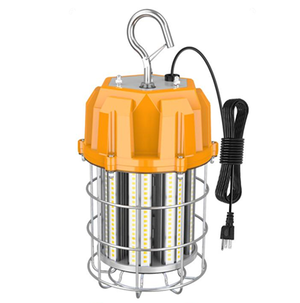
10. Compact & Lightweight
Compared to bulky halogen floodlights, LED units are lightweight and slim, easy to carry around job sites without extra physical burden.
Can LED work lights be used in extreme temperatures?
Short answer: Industrial-grade sealed LED work lights work reliably in extreme hot and cold, while cheap consumer portable models have strict temperature limits and will malfunction in harsh extremes.
1. Performance in extreme cold (below 0°C / 32°F)
Advantages of LEDs in freezing weather
LED chips physically perform better in cold: lower junction temperature cuts energy waste as heat, boosting brightness and extending LED chip lifespan. Unlike fluorescent or halogen lamps that dim, flicker or refuse to ignite in cold, LEDs light up at full brightness instantly, even at -40°C / -40°F with proper hardware.
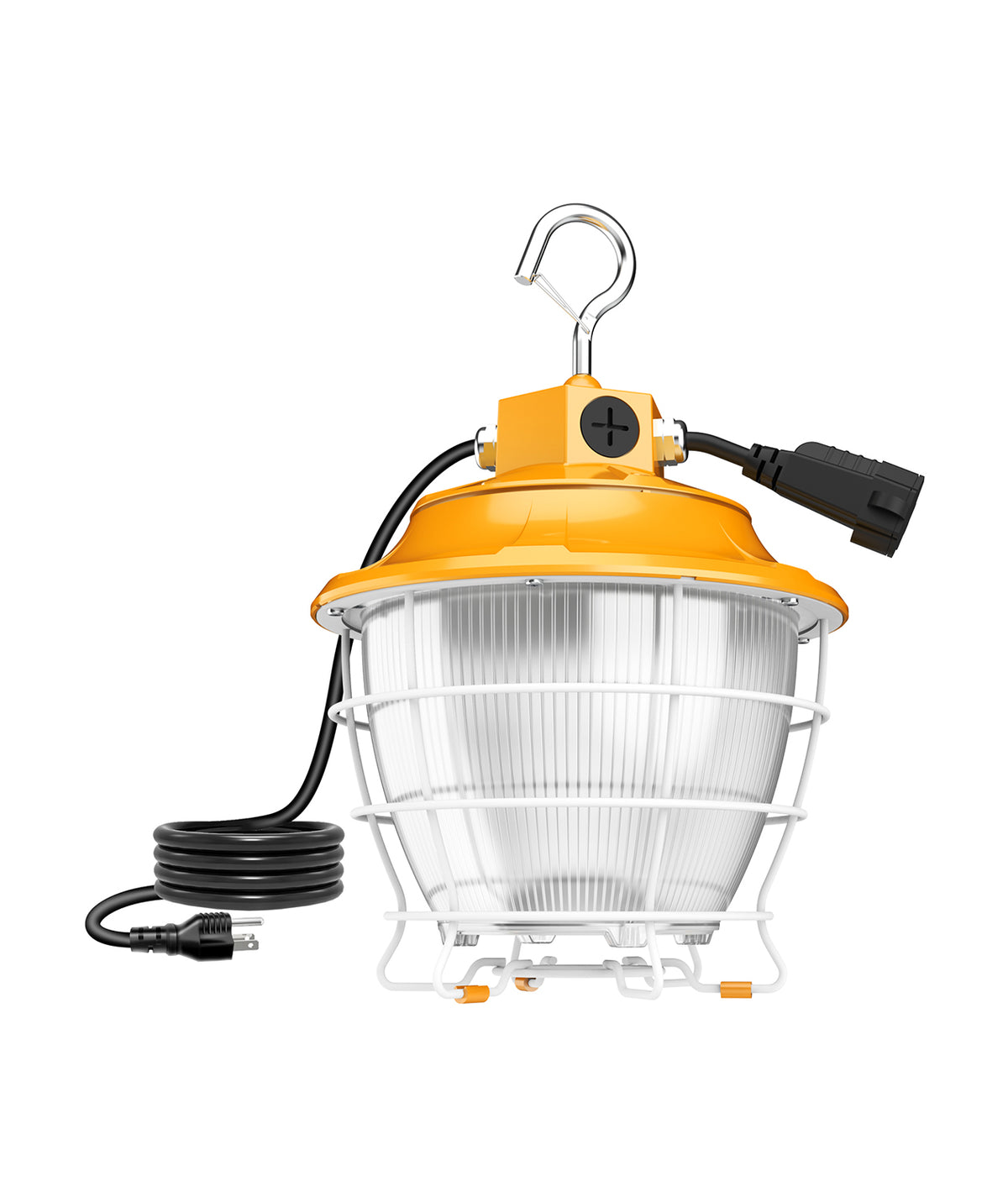
Cold-temperature limitations (mostly cheap consumer lights)
- Budget plastic-bodied lights use liquid electrolytic capacitors that fail below -20°C, causing flickering or startup failure.
- Rechargeable lithium batteries lose capacity sharply in sub-zero cold: shorter run time and reduced brightness until the battery warms up.
- Low-grade plastic lenses and rubber seals turn brittle, crack and let frost/moisture inside, leading to internal short circuits.
2. Performance in extreme high heat (above 40°C / 104°F)
Acceptable operating range
Standard industrial LED work lights support continuous use up to +60°C. Heavy-duty units with large aluminum heat sinks can handle short-term peaks near 70°C for construction, engine bays, welding workshops.
Heat risks if poorly designed
- Without sufficient heat dissipation, LED junction temperatures spike: brightness drops permanently, lens silicone yellows/cracks, and the driver’s capacitors degrade fast.
- Many low-cost portable lights only rate for 0–40°C. Left in direct sun or hot machinery spaces, they trigger automatic thermal shutdown to protect circuits, or burn out early.
- Built-in rechargeable batteries degrade rapidly above 45°C, swelling and losing cycle life.
3. Key difference: Consumer vs Industrial LED work lights
| Type | Usable Temperature Range | Suitable Extreme Scenarios |
|---|---|---|
| Cheap consumer portable LED work lights | -10°C ~ +40°C | Mild garages, indoor DIY only; not for snow, freezers, hot engine bays |
| Industrial/sealed professional LED work lights | -40°C ~ +60°C | Cold storage, winter road repair, desert construction, machine shop high-heat zones |
4. Practical tips for extreme temperature use
- For freezing environments: Choose lights with ceramic driver capacitors, silicone seals, die-cast aluminum housing; keep rechargeable batteries warm when not in use to preserve runtime.
- For high-heat environments: Pick models with finned aluminum heat sinks and thermal protection; avoid covering the light or running max brightness nonstop for hours.
- Avoid rapid extreme temperature swings (e.g., moving a frozen light straight into a hot workshop) — condensation inside the lens can cause short circuits.
- If working in consistent extreme temps long-term, select IP65/IP67 fully sealed industrial LED work lights rated for wide temperature ranges.


