

1. What is Color Temperature for LED Lighting?
The lighting color temperature refers to the degree of coolness or warmth of the light source, It’s abbreviated as CCT, It should be noted that CCT has no relation to the actual temperature of the light source; it merely represents the color of the light. Different CCT of light can create different atmospheres and also affect our visual perception.
2. Color Temperature
Color temperature originated light from heated black bodies: when an ideal black body is heated, its light hue slowly changes from dark red to warm yellow, then pure white, and finally takes on a cool blue tone as temperature goes up. That’s why CCT is measured by the absolute temperature of a black body at the point of light emission
From the fixed warm light of incandescent lamps in the early 20th century, to the adjustable CCT in the fluorescent lamp era. And then, with modern LED technology fully mature, we’re able to precisely recreate the complete range of CCT, from warm yellow all the way to cool white.
Color Temperature
3. The Most common Color Temperature at A Glance
The common color temperature range is from 1800K to 6500K:
Low color temperature (<3000K): Warm white, ideal for cozy settings such as bedrooms and dining rooms.
Medium color temperature (3000K–6000K): Natural white, suitable for general lighting applications including offices and commercial spaces.
High color temperature (>6000K): Pure white, applicable for industrial lighting and special decorative scenarios.
Color Temperature at A Glance
4. Color Temperature and Color Rending Index
Color temperature describes the color of light, while the Color Rendering Index(CRI or Ra) measures a light source’s ability to accurately reproduce the true colors of objects. with a maximum value of 100. The higher the CRI, the closer an object’s color is to its true hue under natural light.
outdoor recessed downlights cri
Color temperature and the Color Rendering Index are two independent parameters. A quality light source should combine a suitable CCT with a high CRI. Common examples include:
Combination Mode Parameter Examples Applications
High CCT + High CRI 6500K,CRI>95 Requires both bright cool light and precise color rendering.
Examples: Factories, workshops, cold storage, hospitals, etc.
High CCT + Low CRI 6000K,CRI>70 Only needs high-brightness illumination with no color rendering requirements.
Examples: Garages, warehouses, passageways, etc.
Low CCT + High CRI 2700K,CRI>90 Needs a cozy warm light atmosphere while ensuring true colors of clothing, food and other items.
Examples: Restaurants, bedrooms, clothing stores, etc.
Low CCT + Low CRI 3000K,CRI>75 Only basic illumination is needed with no high color rendering requirements.
Examples: Corridors, stairwells, etc.
5. How to Change the Color Temperature of LED Lights
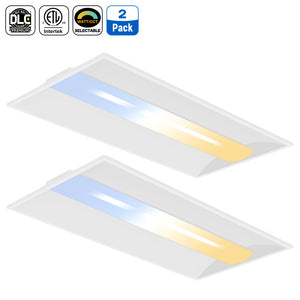
Whether it is LED strip light, wall washer light, or flood light, JCE Lighting’s products all support customization features, including CCT adjustment. You can choose the following methods to change the CCT:
Directly select adjustable lights: For example, JCE Lighting TA Series Dimmable Track Light, there are CCT and brightness adjustment buttons on its back. By simply rotating, you can change the CCT effect.
Install dimming switch: Pair with a professional CCT adjustment switch, by adjusting the current ratio of warm white and pure white channels, you can achieve CCT adjustment.
Use intelligent dimming system: A more common dimming method, through WiFi or Bluetooth connected intelligent control system, such as DALI dimming, 0-10V dimming, PWM dimming, can achieve precise adjustment of CCT and brightness.
Use Color Filter: Add different color temperature Color Filters in front of the existing lights, directly changing the CCT.
led track color filter
6. The Function and Impact of Color Temperature
The color temperature influences our psychological and physiological sensations. Choosing the appropriate CCT can effectively enhance our physical and mental well-being, increase life satisfaction, and improve work efficiency and the value of business scenarios.
The Effect of Color Temperatures on Well-being
Low color temperature (warm white light): Promotes the secretion of melatonin, helps relaxation and sleep, suitable for nighttime environments.
High color temperature (cool white light): Inhibits the secretion of melatonin, helps enhance concentration and work efficiency, suitable for daytime use.
Color Temperature bedroom office
How Does Color Temperature Affect a Commercial or Industrial Space?
In practical applications, the choice of color temperature is directly tied to a space’s functionality.
Commercial Spaces: Restaurants use warm light to set a cozy ambiance and boost customers’ appetites; retail stores opt for neutral light to showcase product details clearly; hospital emergency rooms employ cool white light to ensure the accuracy of medical procedures.
Industrial Spaces: Warehouses and workshops generally use high-color-temperature cool white light to guarantee workplace safety and production efficiency.
7. How to Choose and Avoid Mistakes with Color Temperature
Evaluating Lighting Environments and Functional Demands
First, clarify the attributes and core needs of the usage scenario, then match it with a suitable CCT—avoid blind selection. For example:
Residential spaces: To create a relaxing atmosphere for people to unwind after a busy day, a CCT of 2700K–3500K is recommended.
Retail and exhibition spaces: A range of 5000K–6500K ensures accurate color rendering, making the hues of products and exhibits more true to life.
Factory workshops and storage areas: 5000K–6500K is the top choice, as high brightness and high color rendering can reduce operational errors and potential safety hazards.
Hospitals: A CCT of 4500K–5500K is ideal for delivering clear, true-to-life visual effects; for patient wards however, a warm CCT of 3000K–3500K is recommended to ease patients’ anxiety.
Office and R&D areas: 4000K–5000K helps boost concentration and reduce eye fatigue.
Public passageways and underground garages: To ensure brightness while avoiding glare and improving traffic safety, a CCT of 4000K–4500K is the optimal choice.
What Color Temperature is Best for Eyes?
Under the performance of all light quality parameters is satisfactory, a neutral light around 4000K is highly recommended as a protective light source. This light is soft and has a moderate brightness, which can effectively alleviate the fatigue caused by prolonged eye use. When using your eyes closely, be sure to avoid excessively high or low color temperatures to prevent discomfort such as dry eyes and blurred vision.
Color Temperature Best for Human Eyes
Common Mistakes to Avoid When Selecting LED Color Temperature
Using a single color temperature uniformly across all scenes , disregarding the functional differences and usage requirements of different spaces.
In the same area, various CCT are randomly mixed, resulting in chaotic lighting and visual discomfort.
Focusing only on the CCT values while ignoring the importance of the color rendering index leads to distorted color reproduction of objects.
8. The Future of Tunable Color Temperature Flexibility
The adjustable color temperature technology has become the mainstream development direction in the global LED lighting industry. Whether for home use, office or commercial purposes, these lamps can adapt to different needs. For example, during the day, they can be adjusted to cold light to enhance concentration, and at night, they can be adjusted to warm light to aid sleep, meeting people’s demands for healthy and personalized lighting.
In the future, global adjustable CCT lamps will become increasingly intelligent, capable of automatically adjusting the temperature in conjunction with smart home systems. The adjustment methods will also be more refined, changing from fixed several levels to smooth and continuous adjustment, gradually becoming a standard feature of global lighting.
Conclusion
Color temperature is actually not difficult to understand. Once you grasp the trick, choosing the right one is quite simple. The key is to select the desired level of warmth or coolness based on the application scenario, and then match the color rendering index. Whether it’s an office, commercial, or industrial setting, it can balance comfort and practicality.
JCE Lighting is very reliable in this regard. Most of their products support full CCT customization, allowing for manual adjustment, on/off control, or intelligent operation from warm light at 2700K to cool light at 6500K. You can achieve this through various methods such as manual adjustment, on/off control, or intelligent operation.
Trust JCE Lighting. There’s no need to worry about how to combine or adjust the CCT. Just leave it to us and we’ll help you achieve a one-stop lighting service.
What Color Temperature of Products Does JCE Lighting Offer?
The majority of JCE Lighting products support full color temperature adjustment, allowing for seamless switching between warm light (2700K) and cool light (6500K) to meet diverse CCT requirements.
Which Atmosphere am I Trying to Create?
For a cozy and relaxing ambiance (e.g., bedrooms, dining rooms, lounge areas), opt for warm light (2700K–3500K). The warm yellow glow promotes a comfortable and pleasant feeling.
For precision work settings (e.g., industrial operation zones, precision workbenches), choose cool light (5000K–6500K). The high-brightness cool white light meets the visual demands of meticulous operations.
For a natural and soft ambiance (e.g., living rooms, supermarkets, kitchens and bathrooms), select neutral light (4000K–4500K). It strikes a perfect balance between brightness and comfort.
How to White Balance Different Color Temperature Lights?
First, determine the main color temperature. The deviaton of auxiliary light CCT should be no more than 500K. The combination should be harmonious and the light should be uniform.
Can You Mix Color Temperature Lights in A Room?
They can be mixed, but the color temperature matching principles must be followed! The deviation between the main and auxiliary CCT should be within 500K. The main light should take the dominant position, and only the auxiliary light should be used for atmosphere enhancement. Never mix warm white and cold white directly; chaotic lighting can easily cause visual fatigue.
Does The Color of A Light LED Affect The Temperature?
No! Color temperature describes the visual appearance of the light and has nothing to do with the heat generated by the lamp body. The actual temperature of the lamp only depends on power and heat dissipation. For LED lights with the same power and the same heat dissipation, both warm white light and cold white light, the heat generation is basically the same.


