

1. Basic Definition
IP rating (Ingress Protection Rating) is a globally standard classification system (defined by IEC 60529) that indicates how well an electrical device (outdoor LED lights) is protected against solid particles (dust, sand) and liquid intrusion (water, rain).
Every IP code has two digits:
2. Meaning of the two digits
I: Protection against solid objects & dust
First digit: Protection against solid objects & dust
| Digit | Protection Level |
|---|---|
| 0 | No protection |
| 1 | Protected against solid objects over 50 mm |
| 2 | Protected against objects over 12.5 mm |
| 3 | Protected against objects over 2.5 mm |
| 4 | Protected against objects over 1 mm |
| 5 | Dust-protected: Limited dust ingress; will not interfere with operation |
| 6 | Dust-tight: No dust can enter fully sealed housing |
P:Protection against water:
| Digit | Protection Level | Suitable Scenario |
|---|---|---|
| 0 | No water protection | Indoor only |
| 1 | Vertical dripping water | Covered indoor |
| 2 | Dripping water with slight tilt | Covered semi-outdoor |
| 3 | Spraying rain (up to 60° vertical) | Covered patios |
| 4 | Splashing water from all directions | Balconies, covered outdoor areas |
| 5 | Low-pressure water jets | General outdoor, rain exposure (not direct power washing) |
| 6 | High-pressure water jets | Facade lights, can withstand heavy rain / light hose washing |
| 7 | Temporary immersion (up to 1m depth, max 30 mins) | Pond edge, occasional flooding |
| 8 | Continuous deep immersion | Underwater LED pool lights |
3. Common IP ratings for outdoor LED lights & usage advice
-
IP54Dust protected + against splashing water.Covered outdoor areas (awnings, porches without direct rain)Not for fully open exposed locations.
-
IP65 (Most popular general outdoor LED rating)Dust-tight + resistant to low-pressure water jets.Garden lights, street lights, wall lamps, floodlights exposed to normal rain.Cannot withstand sustained submersion or high-pressure power washing.
-
IP66Dust-tight + resistant to high-pressure water jets.Commercial floodlights, building exterior lighting, seaside areas with heavy rain.
-
IP67Dust-tight + temporary immersion up to 1m.Underground buried LED lights, landscape lights prone to temporary flooding.
-
IP68Fully dust-tight + long-term underwater use.LED pool lights, fountain underwater lights.
4. Key Tips for outdoor LED lighting
- Avoid IP44 or lower for lights fully exposed to open sky and rain.
- Seaside / coastal environments: Choose IP65+, also check anti-corrosion coating (salt spray resistance).
- An IP rating only describes dust & water resistance — it does not measure resistance to extreme temperature, UV sunlight or salt corrosion.
What is the IP rating for a typical outdoor LED flood light?
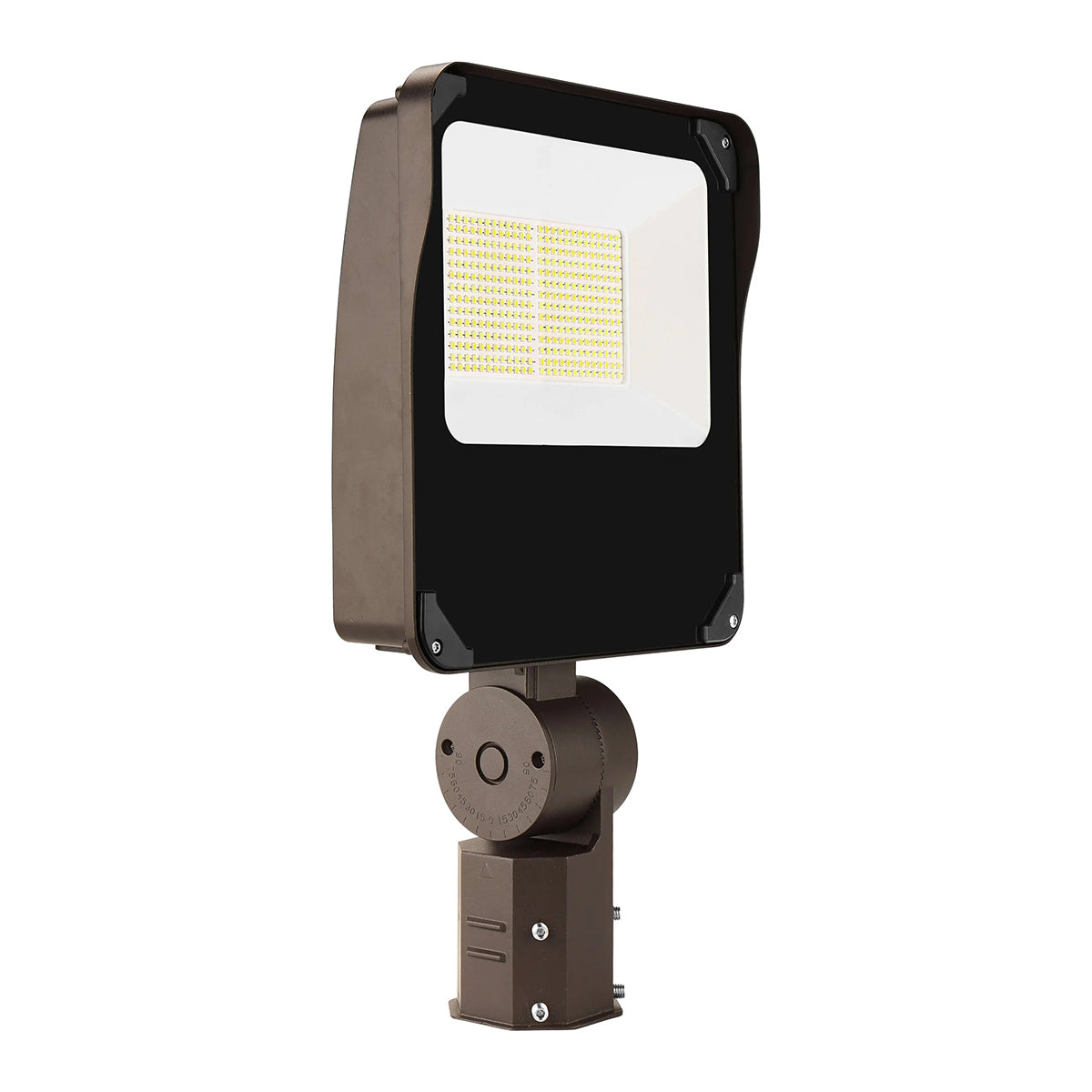
IP65 is the standard, typical IP rating for most common outdoor LED flood lights.
Breakdown
-
IP65
- First digit 6 = Dust-tight: No dust penetrates the fixture.
- Second digit 5 = Protected against low-pressure water jets from any direction (rain, garden hose spray).
This works for most general outdoor applications: yards, building walls, parking lots, billboards.
Other common options you may see
-
IP66 (upgrade)
Resists high-pressure water jets. Better for commercial sites, frequent heavy rain, areas cleaned with pressure hoses.
-
IP67
Allows temporary submersion up to 1 metre. Used for ground-mounted floodlights that may sit in pooled rainwater.
- IP54 – Not recommended for fully exposed floodlights; only suitable for covered, sheltered outdoor spaces.
Important note
IP65 flood lights cannot be permanently submerged underwater. For underwater lighting (ponds, fountains), you need IP68.
Short summary for quick reference
Typical residential & standard commercial outdoor LED flood light: IP65
How IP Rating Impacts the Lifespan of Outdoor LED Flood Lights
LED chips themselves often have a rated lifespan of 30,000–50,000 hours, but water and dust ingress are the biggest reasons outdoor floodlights fail early. The IP rating determines how well the fixture blocks moisture, dust, and contaminants, directly influencing real-world service life.
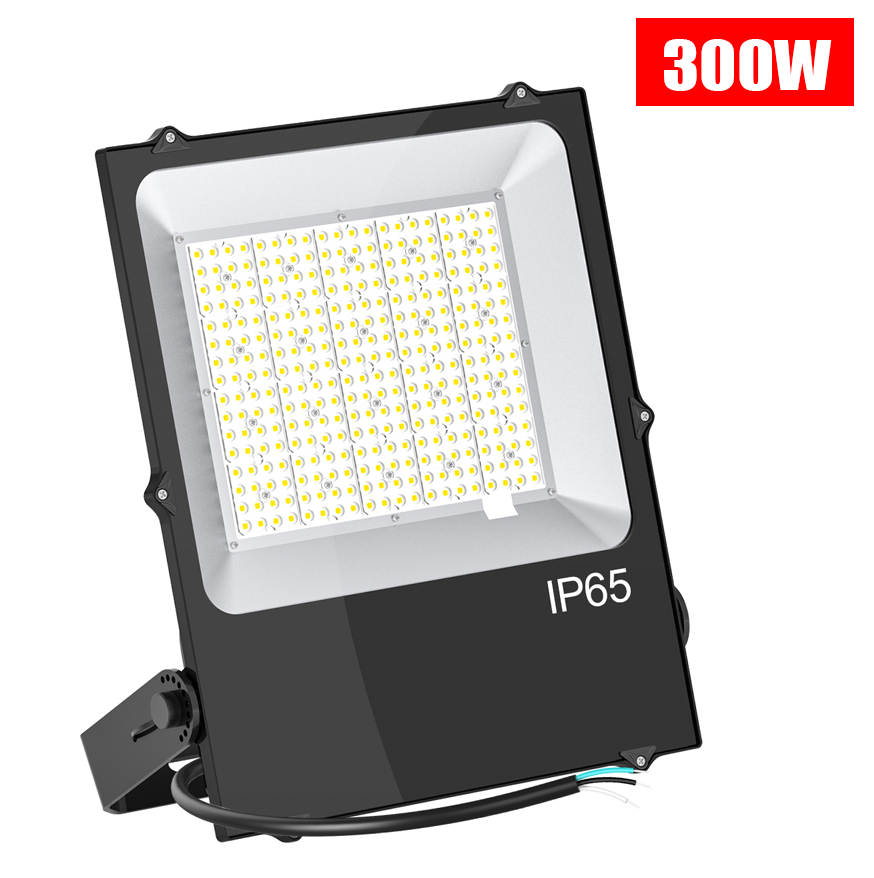
1. Low IP ratings (e.g., IP54 or lower) – Short service life
- Limited dust protection and only splash resistance.
- Rain, humidity, fine dust can slowly seep inside the housing.
Common failures:
- Dust accumulates on LED chips → poor heat dissipation → overheating, faster lumen decay.
- Moisture condenses inside the lamp cavity (internal fogging).
- Corrosion of circuit boards, driver power supply, solder points.
- Short circuits or sudden burnout of the LED driver (the most frequent failure part).
Result: Light may fail in 1–3 years, far below its rated LED lifespan.Suitable only for sheltered porches with no direct rain.
2. Standard rating: IP65 (typical outdoor floodlight)
- 6 = Dust-tight: No dust enters the enclosure.
- 5 = Resists low-pressure water jets / normal rainfall.
- Effectively stops rain and airborne dust under regular outdoor conditions.
- Condensation risk is greatly reduced if the light has proper vent design.
Expected performance:
If installed correctly, most IP65 floodlights can operate close to their designed lifespan (4–8 years for residential use).
Limitation: Not designed for direct high-pressure power washing or long-term standing floodwater.
3. Higher ratings: IP66 / IP67 – Longer reliable life
-
IP66: Dust-tight + withstands high-pressure water jets.
Ideal for commercial buildings, car parks, areas regularly washed down. Less risk during cleaning; slower internal contamination.
-
IP67: Dust-tight + temporary submersion up to 1 m for 30 minutes.
Great for low ground floodlights that collect rainwater. Avoids damage from temporary flooding.
These versions typically achieve their full advertised lifespan with minimal premature faults.
4. IP68
For permanent underwater installation (fountains, pools). Not needed for regular wall/ground floodlights. Using IP68 on normal outdoor floodlights brings no extra lifespan benefit and increases unnecessary cost.
Additional critical clarifications
-
IP rating only measures dust and water resistanceIt does not guarantee lifespan. Other factors still matter: heat sink quality, LED driver quality, UV resistance of plastic, anti-corrosion treatment for coastal salt air. A cheap poorly sealed IP65 lamp can still fail quickly due to low-quality rubber gaskets that degrade over time.
-
Poor installation can defeat a high IP ratingLoose screws, damaged silicone gaskets, incorrectly sealed cable entry points allow water to leak in — even an IP66 lamp will fail prematurely.
Simple Summary
- Lower IP → higher chance of dust/moisture intrusion , circuit corrosion & overheating, much shorter actual lifespan.
- IP65 is the balanced choice for standard outdoor floodlights to reach near-rated service life.
- Upgrade to IP66/IP67 if the location faces heavy rain, regular washing or temporary flooding to extend trouble-free working years.


