

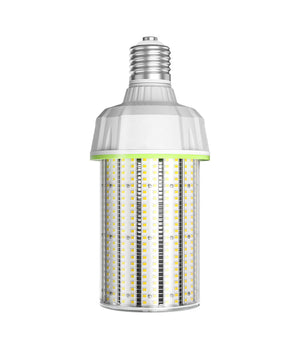
LED corn bulbs get their name from rows of LED chips arranged like kernels on a corn cob. They are high-brightness retrofit lamps, designed to replace older inefficient lights.
Common applications
-
Street & parking lot lightingReplace traditional metal halide, high-pressure sodium street lamps and parking area lights.
-
Warehouses, factories & workshopsHigh bay / low bay lighting for large indoor industrial spaces that need strong, uniform overhead light.
-
Parking garagesIndoor underground parking lots, durable and low-maintenance.
-
Commercial retail & storage facilitiesSupermarkets, logistics storage areas, shopping mall backrooms.
-
Garden yards, plazas, outdoor courtyardsOutdoor landscape lighting, garden pole lights.
-
High lamp posts / canopy lightsGas station canopy lighting, stadium perimeter lights, exterior pole fixtures.
Key advantages for these uses
- Direct replacement for HID, halogen, mercury vapor bulbs
- Much lower power consumption, longer lifespan
- Instant full brightness (no warm-up delay unlike old HID lights)
- Less heat output
Simple note
They are not typical household table lamp bulbs. They fit large industrial/commercial light fixtures with E26, E27, E39, E40 large screw bases.
How much energy do LED corn bulbs save compared to traditional bulbs?
LED corn bulbs are mainly used to replace HID lamps (metal halide, high-pressure sodium, mercury vapor) and older halogen industrial bulbs.
Typical Power Replacement Ratios & Savings
| Old lamp type | Equivalent LED corn bulb | Energy saved |
|---|---|---|
| 100W Mercury Vapor | 30–40W LED corn | 60%–70% |
| 150W High Pressure Sodium (HPS) | 50–60W LED corn | 60%–67% |
| 250W Metal Halide (MH) | 80–100W LED corn | 60%–68% |
| 400W Metal Halide / HPS | 120–150W LED corn | 62%–70% |
| Halogen industrial bulbs | LED corn equivalent | 75%–85% |
General rule of thumb
Average energy saving: 60% ~ 75% when replacing HID lighting.
Extra important benefits (add to cost savings)
- No warm-up time: HID bulbs need 5–15 minutes to reach full brightness; LEDs turn on instantly.
-
Longer lifespan:
- HID: 8,000–15,000 hours
- LED corn: 30,000–50,000 hours
Fewer replacement costs and less maintenance labor.
- Lower heat generation: Less air conditioning load in indoor warehouses.
Example calculation
If you run a 250W metal halide light 10 hours/day:
- Old lamp daily energy: 2.5 kWh
- Replace with 100W LED corn: 1.0 kWh
Saves 1.5 kWh every day = 60% electricity reduction.
LED Corn Bulb Annual Electricity Cost Comparison Template
Basic Formula
Daily power consumption (kWh) = Wattage ÷ 1000 × Daily running hours
Annual consumption = Daily kWh × Operating days
Annual cost = Annual consumption × Electricity price (USD/kWh or local rate)
Sample Scenario
Original lamp: 250W Metal Halide
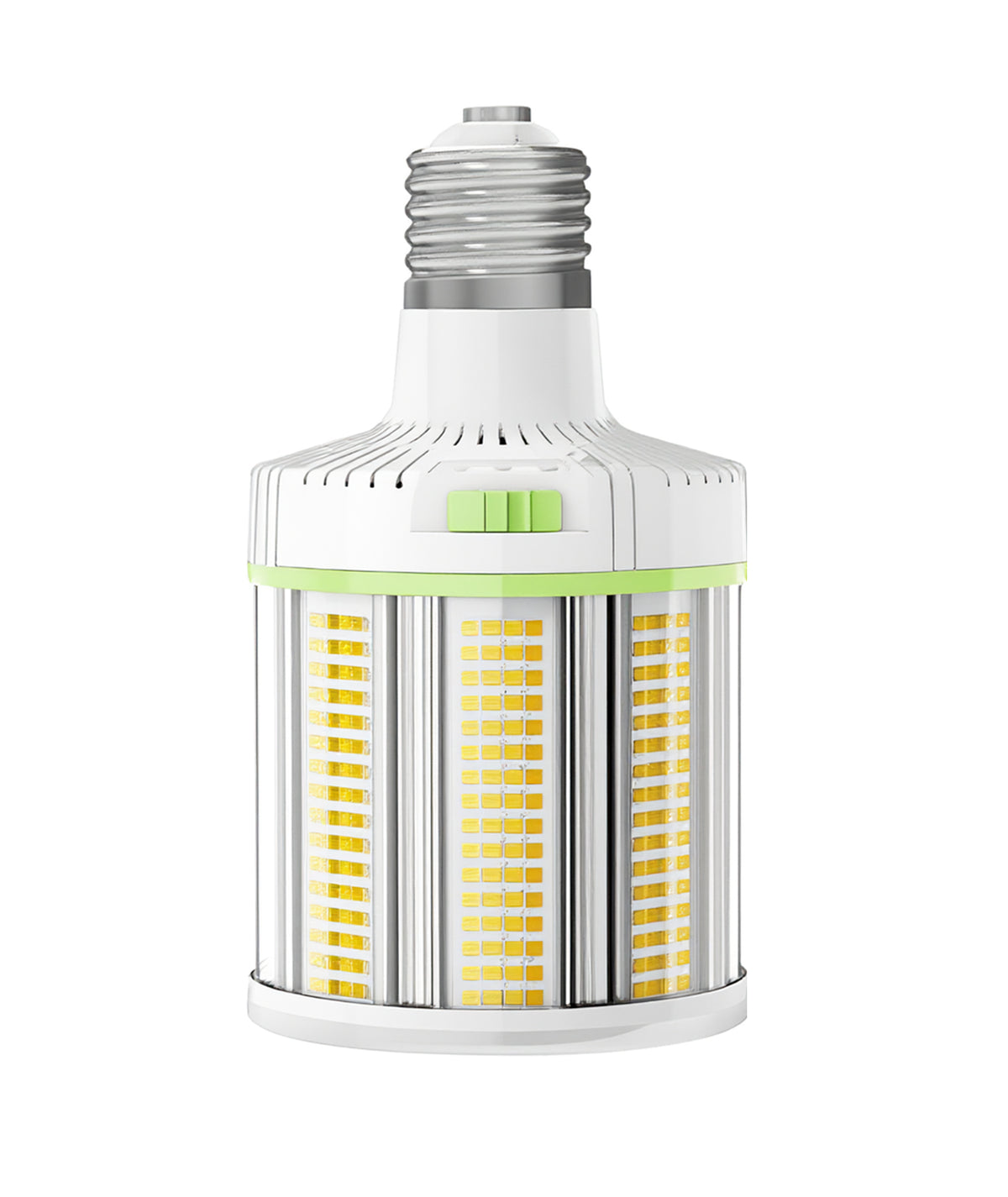
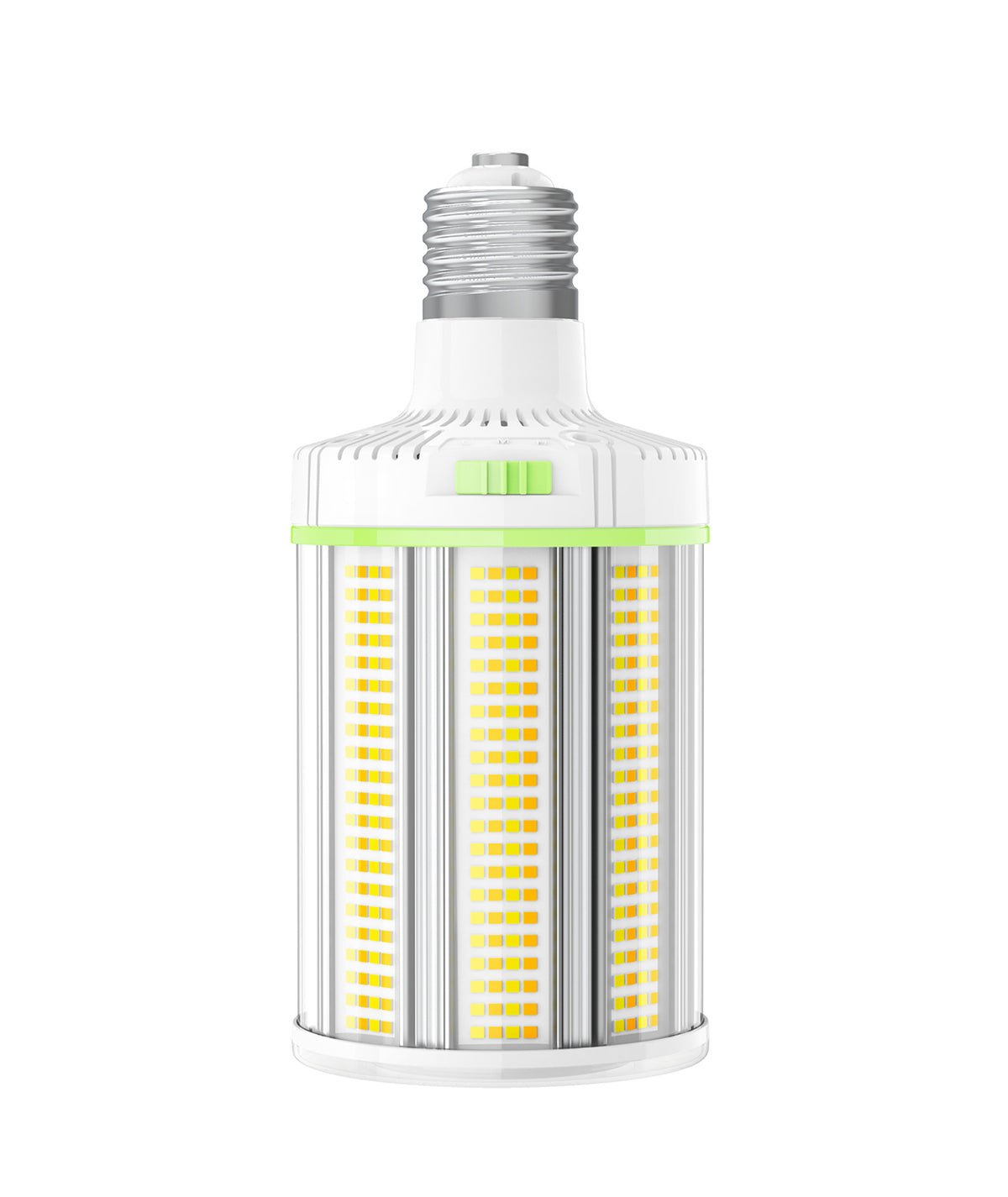
Replacement: 100W LED corn bulb
Operation: 10 hours/day, 365 days/year
1. Old Metal Halide Lamp
Daily energy = 250 ÷ 1000 × 10 = 2.5 kWh
Annual energy = 2.5 × 365 = 912.5 kWh
Annual electricity cost = 912.5 × 0.12 = $109.50
2. 100W LED Corn Bulb
Daily energy = 100 ÷ 1000 × 10 = 1.0 kWh
Annual energy = 1.0 × 365 = 365 kWh
Annual electricity cost = 365 × 0.12 = $43.80
3. Savings per bulb
Annual energy saved: 912.5 − 365 = 547.5 kWh
Annual cost saved: 109.50 − 43.80 = $65.70
Energy saving rate: 60%
- Old lamp wattage: ________ W
- LED corn bulb wattage: ________ W
- Daily operating hours: ________ h
- Operating days per year: ________ days
- Electricity tariff: ________ currency / kWh
Calculation steps
Old daily kWh = Old wattage ÷ 1000 × Daily hours
LED daily kWh = LED wattage ÷ 1000 × Daily hours
Old annual cost = Old daily kWh × Days × Tariff
LED annual cost = LED daily kWh × Days × Tariff
Annual savings = Old annual cost − LED annual cost
Saving percentage = (Old wattage − LED wattage) ÷ Old wattage × 100%
Extra Cost Bonus (optional add to your report)
- Lifespan: HID ~12,000 hrs | LED corn ~40,000 hrs
→ Fewer bulb purchases + less maintenance labor cost
- No warm-up loss: HID lights waste extra energy during startup


