

Simplify all LED shop light types in short plain English for you in the following:
-
4ft Linkable Linear LED LightsLong strip lights for regular home garages, low ceilings under 10ft, cheap and easy to chain together.
-
UFO LED High BayRound industrial hanging lights for tall ceilings (12–30 ft), auto repair shops, warehouses.
-
Long rectangular industrial lights for long workshops, production lines, better even lighting than UFOs.
-
LED Flat PanelsThin flush-mount ceiling lights for clean small hobby rooms, low brightness for light craft work.
-
Vapor Tight LED LightsTotally sealed waterproof/dustproof lights for damp, oily, dusty spaces like paint booths or grinding workshops.
-
LED Low Bay LightsMid-power hanging lights for ceilings 8–12 ft, between linear tubes and high bays.
-
Wraparound LED LightsFrosted covered long lights with soft glare-free light for desk and electronics repair work.
-
Portable LED Task LightsTripod lights, magnetic bench lamps, temporary movable supplementary lighting.
How to Choose LED Shop Lights for a Workspace
1. Calculate Required Brightness (Lumens)
Lumens measure total light output—watts only indicate power use. Match lumens to your workspace size and tasks:
- Light storage / casual hobby space: 70–100 lumens per sq. ft
- General workshop, woodworking, assembly: 150–250 lumens per sq. ft
- Detail work (welding, electronics, painting, machining): 300–500 lumens per sq. ft
Example: A 300 sq. ft regular shop needs roughly 45,000–75,000 total lumens split across multiple fixtures.
Avoid relying solely on wattage; a 100W LED produces far more lumens than old fluorescent bulbs.
2. Pick the Right Color Temperature (Kelvin, K)
Color temp decides how warm/cool the light looks and visibility of details:
- 3000K (Warm white): Soft yellow, good for break areas; poor for precision work (hides small defects)
- 4000K (Neutral white): Balanced, all-around choice for general shops, metalwork, carpentry
- 5000K–6500K (Daylight white): Crisp blue-white, best for detailed tasks—reveals scratches, paint tones, tiny parts. Ideal for garages, auto repair, electronics labs.
Most professional workshops choose 5000K–6000K.
3. Check CRI (Color Rendering Index)
CRI shows how accurately light displays real object colors, scored 0–100:
- CRI 80+: Basic workshop use, acceptable for rough construction
- CRI 90+ (High CRI): Mandatory for painting, fabric work, auto body matching, electronics inspection
Low-CRI lights distort paint, metal stains and material textures, leading to mistakes.
4. Select Suitable Fixture Types for Your Space
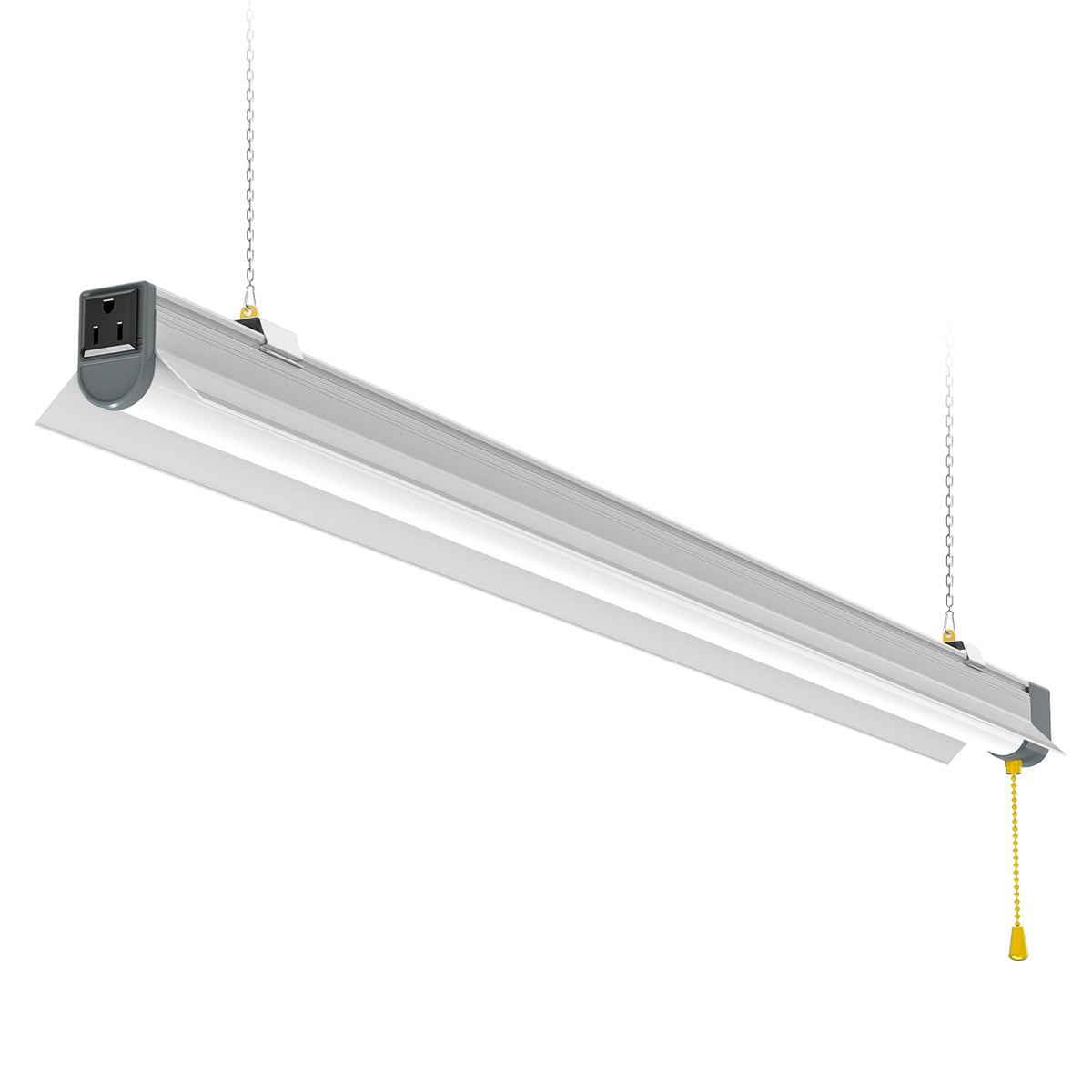
Linear LED Shop Lights (Strip Tubes)
- Best: Long garages, wall-mounted under shelves, ceiling rows
- Pros: Wide even light, low profile, linkable together
- Cons: Less focused for high-ceiling large warehouses
LED High Bay Lights (UFO / Linear High Bay)
- Best: High ceilings (12ft+), large machine shops, warehouse-style workspaces
- Pros: Powerful concentrated light, long throw distance, dust/water resistant
- Two main styles:
- UFO High Bay: Round, compact, great for round coverage zones
- Linear High Bay: Rectangular, uniform long-row lighting for assembly lines
LED Panel / Garage Ceiling Lights
- Best: Low-ceiling home workshops, small hobby garages
- Pros: Flat, easy surface mount, affordable, diffused glare-free light
LED Task Lights (Clamp / Magnetic Work Lamps)
- Supplementary light for bench-only precision work; use alongside overhead main lights.
5. Verify Mount Height & Beam Angle
- Narrow beam angle (60°–90°): High bay lights for tall ceilings, focus light downward to work floors
- Wide beam angle (120°–180°): Linear tubes & flat panels for low ceilings, spread light evenly without dark corners
Rule: Higher ceiling = narrower beam angle to prevent wasted light on walls.
6. Look for Durability & IP Rating
Shops generate dust, metal shavings, oil mist, occasional water spray:
- IP44: Basic dust-resistant, dry hobby garages
- IP65 / IP66: Heavy-duty, waterproof & dustproof—perfect for auto shops, metal fabrication, wet workshop areas
Extra features to prioritize: Aluminum heat sinks (longer LED lifespan), shock-resistant casing (stand up to tool knocks).
7. Power & Energy Efficiency
- LED efficacy target: ≥100 lumens per watt (lm/W) – higher = lower electricity bills
- Voltage: 120V standard for home garages; 208–277V commercial voltage for industrial shops
- Dimmable option: Useful if you switch between heavy machinery and delicate fine work
8. Extra Practical Features
- Motion sensor: Auto shut off when no one’s present to save power
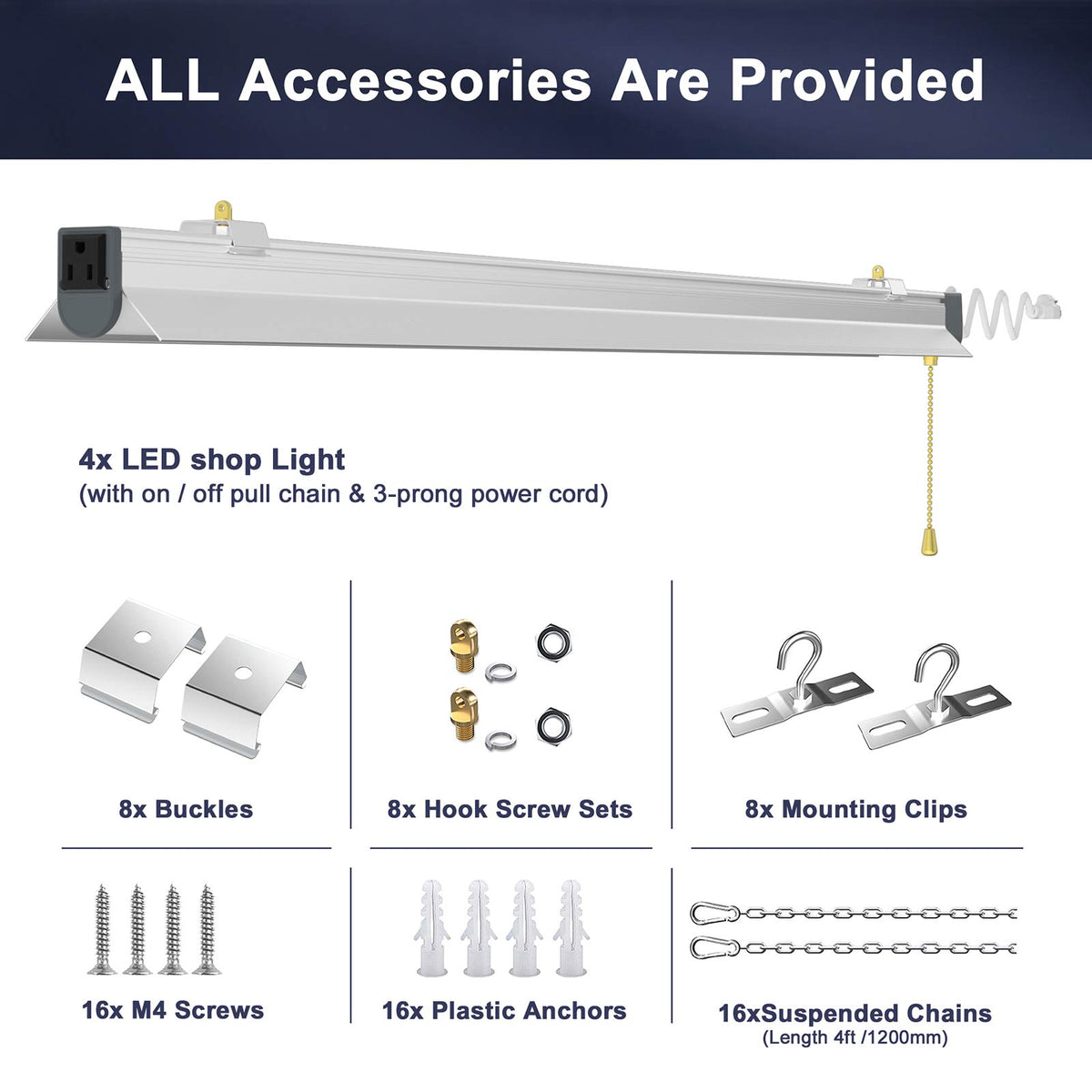
- Linkable design: Connect multiple linear lights without separate wall outlets
- No flicker: Flicker-free LEDs reduce eye strain during long work hours
- Long lifespan: Choose fixtures rated 50,000+ hours to cut replacement costs
- Overheat protection: Prevents burnout in hot workshop environments
9. Avoid Common Mistakes
- Don’t buy warm 3000K light for detail machining/painting
- Don’t use only one single powerful fixture (creates harsh shadows; layer multiple small lights)
- Skip cheap low-CRI LEDs if you work with colored materials
- Match IP rating to your shop’s dust, oil, or moisture level
Quick Buying Checklist Summary
- Total lumens matching shop size & task
- 5000K–6000K color temp for most workshops
- CRI ≥90 for precision/color work
- Fixture style matched to ceiling height
- IP65 dust/water resistance for industrial shops
- ≥100 lm/W efficiency, flicker-free
- Layer overhead lighting + bench task lights to eliminate shadows
Frequently Asked Questions
- What are the best LED shop lights?
- The right LED shop lights are the fixtures that match ceiling height, tasks, glare tolerance, layout, and mounting method.
- How bright should shop lights be?
- Brightness depends on the task. General movement, repair work, and detail work need different light levels and fixture placement.
- What CCT is good for a shop?
- Neutral or daylight white is common, but comfort, color work, and long work sessions should guide the choice.
- Are plug-in shop lights or hardwired fixtures better?
- Plug-in fixtures can work for simple spaces. Hardwired fixtures are often better for permanent commercial or code-sensitive installations.


