

Warehouse and industrial LED lighting differs drastically from commercial office lighting. Selection must balance safety, light performance, energy efficiency, durability, and long-term operational cost. Below is a complete step-by-step guide.
1. Determine Lighting Requirements & Key Site Conditions
1.1 Measure mounting height
This is the most critical parameter to select fixture types:
- 4–8 m: LED High Bay (Low Bay)
- 8–15 m: Standard LED High Bay
- 15–30 m: High-power UFO high bay / Linear high bay
Tall racking warehouses need careful beam angle selection to avoid shadowing between storage racks.
1.2 Define required illuminance (Lux)
Refer to international standards (CIE / OSHA / EN 12464):
- General storage warehouse: 100–200 lux
- Order picking zone, packaging area: 200–300 lux
- Manufacturing assembly workshop: 300–500 lux
- Precision inspection area: 500–750 lux
- Loading dock: 150 lux minimum
1.3 Special environmental conditions
Check site environment to select proper IP rating:
- Dry, normal warehouse: IP65 (minimum recommendation)
- Cold storage, humid factory, washdown area: IP66 / IP67
- Dust-heavy workshop (timber, mining, grain): IP65+ anti-dust design
- Hazardous locations (gas, flammable dust): ATEX / IECEx explosion-proof LED lights (ordinary high bays cannot be used)
- Low-temperature cold rooms: Specify low-temperature rated LED drivers (-40°C operation)
2. Core LED Technical Specifications to Compare
2.1 Luminous Efficacy (lm/W)
Prioritize ≥130 lm/W for new industrial projects; premium models reach 150–170 lm/W.
Higher efficacy = lower electricity bills for the same brightness.
Avoid cheap lights with <110 lm/W – large light loss and short lifespan.
2.2 Power Selection
Do not simply copy old HID lamp wattage.
Example: 400W metal halide ≈ 150–200W LED high bay; 1000W HID ≈ 300–400W LED.
Calculate based on target lux, mounting height, beam angle, room reflectance.
2.3 Beam Angle
- 60°: Extra tall ceilings (>12m), concentrated light for deep rack aisles
- 90°: Most common general warehouse (8–12m height)
- 120°: Low ceiling, wide open space, assembly floors
Narrow beams create hot spots; wide beams cause light waste in tall buildings.
2.4 Color Temperature (CCT)
- 4000K (Neutral White): Best all-round choice for warehouses, picking, logistics – balanced visibility, less eye fatigue
- 5000K–5700K (Cool White): Manufacturing, inspection areas, high alert working zones
- ❌ Avoid 6500K+: Too harsh, increases worker eye strain for long shifts
2.5 Color Rendering Index (CRI)
- General storage: Ra >70
- Packaging, product sorting, quality inspection: Ra >80
High CRI helps staff distinguish product colours, labels and safety markings.
2.6 L70 Lifespan
Industrial LED fixtures should have L70 ≥50,000 hours.
L70 means the light output will not drop below 70% of original brightness within rated hours.
3. Choose the Right Fixture Style
-
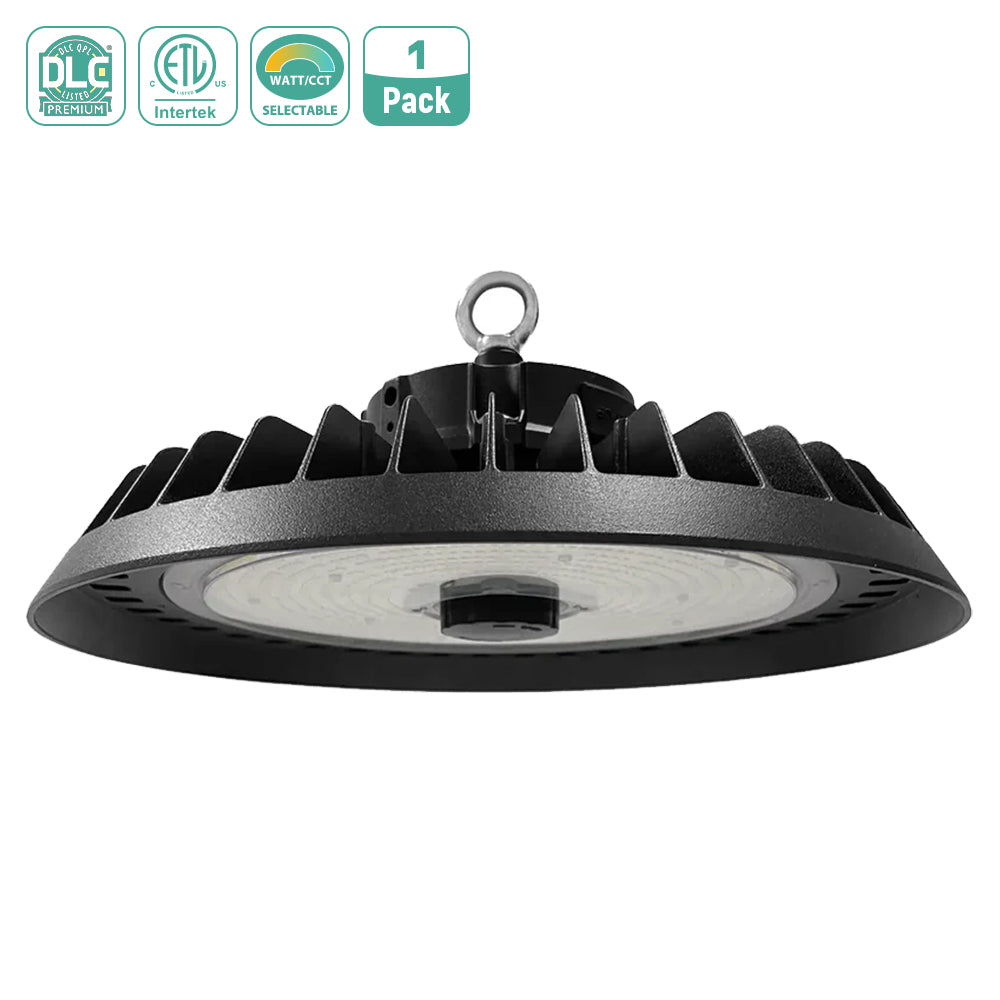
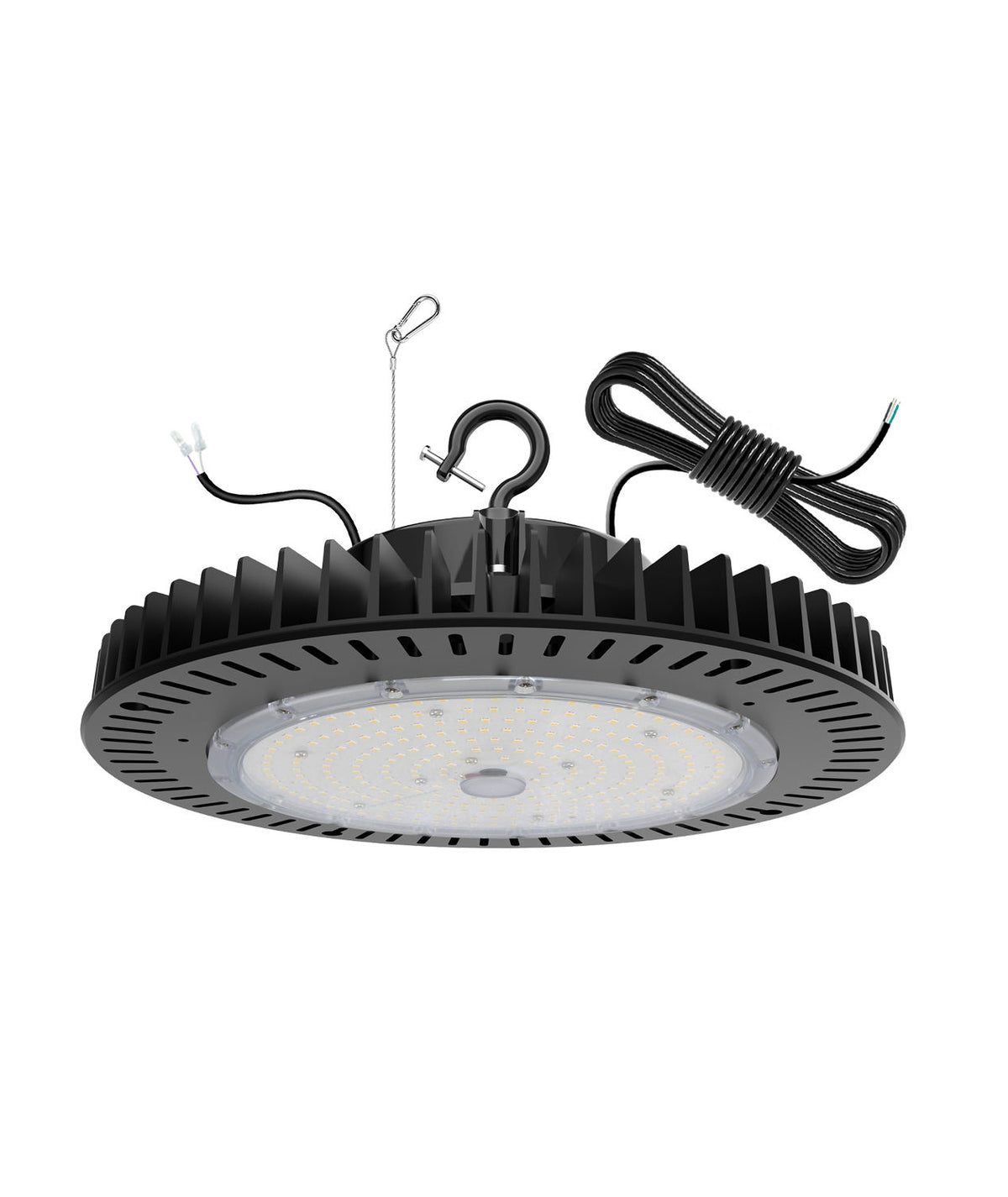
UFO LED High Bay
Round shape, low cost, easy installation. Suitable for open warehouses, loading zones. Less ideal for narrow rack aisles.
-
Linear LED High Bay
Elongated housing, perfect for racked warehouses. Light distributes evenly along rack aisles, minimises shadows.
-
LED Low Bay
For mounting height below 6m: small workshops, ground-floor storage.
-
Explosion-proof LED Lights
Mandatory for chemical warehouses, fuel storage, flour/dust workshops.
-
LED Tri-proof Light
Linear waterproof/dustproof lamp: walkways, cold storage, carpark access tunnels.
4. Smart Control Options (Critical for Energy Saving)
Industrial facilities have huge energy-saving potential with controls:
- Microwave motion sensors: Dim or turn off lights when no personnel present (ideal for rarely accessed storage aisles)
- Daylight harvesting sensors: Automatically dim when natural daylight is sufficient
- 0–10V dimmable LED drivers
- Central DALI lighting control system for large warehouses
Confirm the LED driver supports sensors before purchase; many low-cost high bays are non-dimmable.
5. Driver Quality – The Most Common Failure Point
LED chips rarely fail; the power driver is the main fault source.
Requirements:
- Isolated constant-current driver
- Surge protection ≥4kV (industrial sites suffer frequent voltage spikes)
- Wide voltage range: AC 100–277V or 200–480V (match site power supply)
- Overheat, overvoltage, short-circuit protection
6. Safety & Compliance Certifications
Select certified products to meet factory audit and insurance requirements:
- Global: CE, RoHS, IEC standard
- North America: UL / DLC listed (DLC qualification enables utility energy rebates)
- China: CCC certification
- Hazardous area: IECEx, ATEX
7. Budget & Total Cost of Ownership (TCO)
Do not decide only by upfront price:
- Low-cost no-brand LEDs: Fast light decay, frequent breakdown, high maintenance labour cost
- Calculate TCO: Purchase cost + 5–10 year electricity cost + maintenance & replacement cost
Typical payback period for replacing old metal halide lights with LED: 1.5–3.5 years.
8. Quick Checklist Before Purchase
Confirm mounting height & ceiling structure (hook mount / surface mount / suspension chain)
Measure target lux level and layout (open floor or pallet rack aisles)
Check ambient temperature, humidity, dust, explosion risk
Select beam angle matching building layout
Decide if motion sensor / dimming function is needed
Verify IP rating, surge protection, certification
Request photometric report (IES file) for lighting simulation
Choosing industrial LED lighting relies on site conditions, lighting performance, reliability and total operating cost, follow these core criteria:
-
Site survey first
Confirm mounting height, target lux level, layout (open area or rack aisles), ambient environment (temperature, dust, moisture). Use explosion-proof LED lamps if handling flammable gas/dust.
- Select proper fixture type
- UFO LED High Bay: Open warehouses, loading bays
- Linear LED High Bay: Racking aisles (reduce shadows between racks)
- LED Low Bay: Mounting height below 6 m
- Tri-proof LED: Walkways, cold storage, washdown zones
- Key optical parameters
- Efficacy: ≥130 lm/W
- CCT: 4000K (universal) / 5000K (inspection zones)
- Beam angle: 60° (>12m height), 90° (8–12m), 120° (<8m)
- CRI>70 for general storage; CRI>80 for sorting & quality checking
-
Driver & durability
Isolated driver with ≥4kV surge protection; L70 ≥50,000hrs. Minimum IP65 for standard warehouses.
-
Smart controls for energy savings
Microwave motion sensors, daylight harvesting, 0–10V / DALI dimming recommended.
-
Certifications & TCO
Prioritize CE, RoHS, UL/DLC. Evaluate total cost of ownership instead of only upfront price.
table { border-collapse: collapse; width: 100%; } th, td { border: 1px solid #ccc; padding: 8px; text-align: left; }
| Item | UFO LED High Bay | Linear LED High Bay |
|---|---|---|
| Shape & Light distribution | Round symmetrical light | Elongated rectangular light output |
| Best application | Open warehouse floors, loading docks, wide open workshops | Narrow pallet rack aisles, long production lines |
| Shadow performance | Easy to form shadows between storage racks | Uniform lighting along aisles, minimizes rack shadows |
| Mounting height | 6–15m | 5–14m |
| Installation | Simple, single-point suspension | Can be installed continuously in rows |
| Cost | Generally lower unit price | Slightly higher unit price |
| Beam flexibility | Single symmetric beam angle | Better alignment for linear working zones |
3. One-page Quick Selection Checklist (Can be attached to quotation)
- Mounting height: ____ m
- Working area type: open space / rack aisle / assembly line / loading dock / cold storage / hazardous area
- Required illuminance: ____ lux
- Ambient temperature range: ____ ℃
- Required IP rating: IP65 / IP66 / IP67
- CCT: 4000K 5000K
- Beam angle: 60° 90°120°
- Sensor: Microwave motion sensor , Daylight sensor , No sensor
- Dimming: Non-dimmable , 0-10V dimmable , DALI ,
- Certifications required: CE / RoHS / UL / DLC / ATEX/IECEx
- Fixture type: UFO High Bay , Linear High Bay , Low Bay , Tri-proof , Explosion-proof,
Can LED lighting be dimmed or controlled remotely in warehouses and industrial applications?
Yes. Modern industrial LED warehouse lights fully support dimming and remote control, but it depends on the LED driver specification and selected control system.
1. Dimming Options for Industrial LED Lights
Only fixtures equipped with dimmable constant-current drivers support dimming. The most common industrial protocols:
① 0–10V Analog Dimming (Most widely used for warehouses)
- Simple, low cost, easy wiring for retrofits and new projects
- Compatible with standalone daylight sensors, microwave occupancy sensors
- Suitable for zone-by-zone independent control
② DALI Digital Dimming (For large, smart warehouses)
- Digital addressable control: each light can be individually controlled
- Supports grouping, scene setting, fault feedback, lighting status monitoring
- Ideal for big distribution centers with multiple rack aisles and working zones
③ TRIAC dimming
Not recommended for high-bay industrial LEDs. Prone to flicker and unstable performance at high power.
Important reminder: Many low-cost basic LED high bays use non-dimmable drivers. If you need dimming, specify dimmable versions at the time of ordering.
2. Remote Control Solutions for Warehouses & Factories
Wired remote control systems
- DALI lighting control panel / central building management system (BMS)
- Integrates with factory automation, warehouse management systems
Wireless remote control (Popular for warehouses with complex cabling)
-
Bluetooth / Bluetooth Mesh
Short-range control; good for small-to-medium warehouses. Simple commissioning via mobile APP.
-
Zigbee
Stable mesh network; enables remote grouping, scheduling and sensor linkage.
-
LoRa / LoRaWAN
Long-distance wireless communication, ideal for large, sprawling industrial parks or multi-building warehouses.
-
Wi-Fi
Convenient APP remote access, but less stable in dusty, high-interference industrial environments.
3. Typical Automated Control Functions for Industrial LED Lighting
These functions can be operated locally or remotely:
- Microwave motion detection: Dim lights to 20%–30% standby brightness when aisles are vacant; boost to full brightness when staff or forklifts pass
- Daylight harvesting: Automatically reduce brightness based on natural skylight from roof windows
- Timed scheduling: Pre-set lighting modes for shift start/end, night maintenance
- Central remote monitoring: Check fixture status, track power consumption, receive fault alarms
- Zone control: Separate management for loading docks, picking aisles, bulk storage areas
4. Key Practical Considerations for Industrial Environments
-
Avoid flicker
Select drivers with high-quality constant-current design. Flicker risks safety for forklift operators and machine workers.
-
Cold storage & extreme temperature sites
Confirm dimmable drivers are rated for low/high ambient temperatures. Standard drivers may lose dimming performance in cold rooms.
-
Electrical interference
Factories have heavy machinery generating voltage spikes. Use drivers with surge protection and shielded wiring for control signals.
-
Hazardous areas (ATEX/IECEx zones)
Explosion-proof LED lights must use certified explosion-safe control modules; ordinary sensors and dimmers cannot be installed directly.
5. Energy Saving Benefit
Remote dimming and smart sensing usually cut warehouse lighting power consumption by 30%–60%, especially for low-traffic storage aisles that do not require full brightness all day.
Quick Summary for your quotation/proposal
Industrial LED warehouse lighting supports both dimming and remote control. Choose 0–10V for basic sensor-linked dimming; select DALI or wireless mesh systems if full remote monitoring, zone control and central management are required. Always confirm fixtures are fitted with compatible dimmable LED drivers.


