

Illumination Standards for Indoor Basketball Courts
The standards cover illuminance (lux), uniformity, color rendering, color temperature, glare, flicker, vertical illuminance, for recreational, training, amateur competition and professional broadcast‑level indoor basketball venues.
1. Horizontal Illuminance (on the court floor)
| Venue usage | Average horizontal illuminance (Eh, lux) |
|---|---|
| Recreational / public use | 300 lx |
| Training & school competition | 500 lx |
| Amateur / local official competition | 750 lx |
| Professional competition (non‑TV broadcast) | 1000 lx |
| TV broadcast / HD live competition | 1500 lx |
Note: Some international standards (FIBA) require the maintained illuminance (after lamp aging & dust accumulation), not initial value.

2. Illuminance Uniformity
- U1 (min/average) ≥ 0.6
- U2 (min/max) ≥ 0.4 Uniformity avoids overly bright spots and dark zones across playing surface; critical for players judging ball trajectory.
3. Vertical Illuminance
Very important for TV broadcasting: for capturing players, faces and moving basketball.
- Non‑broadcast competition: average vertical illuminance ≥ 500 lx
- HD TV broadcast: average vertical illuminance ≥ 1000 lx Ratio of vertical / horizontal illuminance normally between 0.6‑0.9.
4. Color Rendering Index CRI
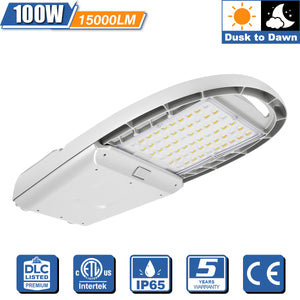
- General training & recreation: Ra ≥ 80
- Competitions with video recording / broadcast: Ra ≥ 90 High CRI ensures accurate judgement of jersey colors, ball color and player skin tones.
5. Correlated Color Temperature CCT
- Recommended: 4000 K‑5000 K neutral white Avoid warm light below 3000 K (dim sport vision) and cool light above 6000 K (eye fatigue).
6. Glare Requirement
Use UGR (Unified Glare Rating):
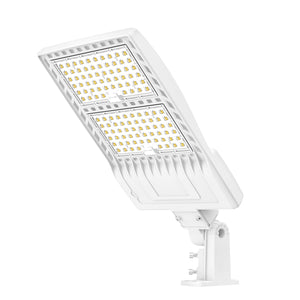
- Indoor basketball arena: UGR ≤ 19 Too much glare impairs players seeing high‑flying basketball. Light fixtures must adopt anti‑glare reflectors or honeycomb baffles.
7. Flicker
- Flicker index ≤ 0.1, no perceptible stroboscopic effect. For slow‑motion replay in broadcast venues: low‑flicker LED power supply is mandatory.
8. FIBA core key points (maintained values)
- All above values are maintained illuminance (after depreciation, lamp aging, dust, normally 70% of initial lighting output). Do not only design based on brand‑new lamp data.
- Light distribution must prevent direct glare to athletes and referees.
- Avoid excessive reflected glare from polished wood sports floor.
Quick practical reference for project design
- School gym for student games: Eh = 500 lx, U≥0.6, Ra≥80, CCT 4000‑5000K, UGR≤19
- Professional indoor arena for matches & live streaming: Eh = 1500 lx, vertical ≥1000 lx, Ra≥90, strict anti‑flicker.
What are the common problems in the installation of indoor basketball court lighting?
Common Problems in Indoor Basketball Court Lighting Installation
Many lighting failures and poor on‑site effects come from improper installation, not fixture quality itself. Below are frequent on‑site issues, causes and risks.
1. Improper mounting height & spacing
- Problem: ① Install too low (<6 m): Severe direct glare to players’ eyes when looking up for rebounds; players may hit fixtures. ② Mount too high (>13 m): Insufficient illuminance; need higher‑power lamps, waste energy. ③ Uneven fixture spacing: Bright hot spots and dark shadow areas on the court floor, low uniformity.
- Risk: Poor ball‑tracking vision; fails illuminance acceptance standard.
2. Wrong light beam angle selection
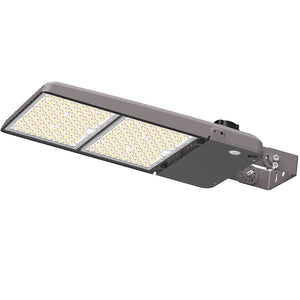
- Problem: Using too‑narrow spot beams or excessively wide flood beams without calculation. Many installers pick fixtures only by wattage, ignoring beam angle.
- Performance: Narrow beam → bright small spots, large dark gaps; Over‑wide beam → lots of light wasted onto walls/ceiling instead of court surface.
- Result: Cannot reach required uniformity even with enough total wattage.
3. Poor anti‑glare arrangement
- Problem: Fixtures directly face the court or are arranged right above the player activity zone without baffles; light shines straight into athletes’ sightline during jumping and shooting.
- Risk: High UGR value. Players feel dazzled, hard to see flying basketball; easy visual fatigue.
Note: Even good anti‑glare fixtures will cause glare if installation position is wrong.
4. Incorrect suspension & structural safety
- Problem: ① Thin hanging chains / wires overload; unreliable ceiling anchor points. ② Uneven horizontal level of lamps; light tilts randomly after long‑term vibration. ③ No anti‑swing measures: Gym ventilation fans or ball impact vibration make lamps swing.
- Risk: Safety hazard of fixture falling; beam direction drifts after swinging, lighting effect changes.
5. Wiring and power‑supply defects
- Problem: ① Insufficient wire gauge, long cable runs causing voltage drop → lamp brightness decreases. ② Mixed wiring without separate circuits; no overload protection. ③ Poor heat dissipation for drivers; drivers installed in closed narrow ceiling cavity with poor ventilation. ④ Unfiltered power supply, harmonic distortion, leading to visible flicker.
- Consequence: Lamps flicker, early driver burnout, unstable brightness, potential fire risk.
6. Ignoring maintained illuminance in installation design
- Problem: Commissioning only measures initial illuminance of brand‑new lamps. No reserve for light depreciation, dust accumulation on lamps and ceiling dirt.
- Result: After 1‑2 years of operation, illuminance drops below standard requirements.
7. Light distribution layout error
- Problem: Lamps installed all along one side of venue, or concentrated only above center court. Lack symmetric multi‑point layout around court perimeter.
- Phenomenon: One‑sided shadows when players run; vertical illuminance is extremely low, bad for video recording and matches.
8. Insufficient consideration of site environment
- Problem: ① Lamps installed close to air‑conditioning air outlets: Hot‑cold air shock accelerates LED driver aging. ② No dust‑proof maintenance space; fixtures are placed in hard‑to‑reach positions for cleaning and replacement.
- Effect: Shorten lamp service life; later maintenance cost high.
9. Dimming system matching problem
- Problem: Mismatch between dimming power supply and control system (0‑10V / DALI). Wrong wiring of dimming signal lines.
- Phenomenon: Some lamps cannot dim; inconsistent brightness among different fixtures; random flashing.
Brief summary for engineering reference
The top‑frequency installation issues are: incorrect height‑spacing layout, unreasonable beam‑angle matching, glare caused by lamp position, unsafe suspension structure, wiring & driver cavity heat problem. Even high‑quality LED high‑bay lights cannot achieve FIBA‑level lighting if installed improperly.
Differences Between Indoor & Outdoor Basketball‑Court LED Lighting
Although both use LED chips, indoor and outdoor basketball‑court lighting differ greatly in environmental resistance, optics, installation, illumination standards and protection requirements.
1. Environmental & IP Protection Rating
- Indoor courts Only cope with dust and indoor heat accumulation. General requirement: IP40‑IP54. No need for rain‑proof or anti‑UV structure.
- Outdoor courts Exposed to rain, wind, big temperature swings, UV sunlight, dust, coastal salt spray. Must reach IP65 or higher (IP67 for harsh conditions). Need UV‑resistant lenses and anti‑corrosion die‑cast aluminum housing. Surge & lightning protection is mandatory outdoors.
2. Fixture Type & Installation
- Indoor Fixture type: LED high‑bay light / linear high‑bay light. Mounting: suspended from gym ceiling. Usual height: 6‑12 m.
- Outdoor Fixture type: LED flood light / area light. Mounting: fixed on steel light poles. Usual height: 8‑15 m. Requires wind‑resistance structure for pole‑mounted fixtures.
3. Optical Design & Light Control
- Indoor priority: glare suppression + high uniformity inside court. Use symmetric beam angles. Reflections from walls & ceilings assist lighting.
- Outdoor priority: avoid light spill / light pollution toward surrounding residential areas. Adopt asymmetric beam angles to confine light strictly onto court area; side‑glare control is critical for players’ eyesight.
4. Illuminance (Lux) Standards
- Indoor: Recreation: 300‑500 lux; competition & broadcast: 750‑1500 lux or higher.
- Outdoor: Recreation night game: 200‑400 lux; amateur competition: 350‑500 lux. Outdoor does not need extremely high lux as indoor broadcast arenas.
Both need CRI ≥ 80, CCT 4000‑5700 K neutral‑white, zero stroboscopic effect for basketball sports.
5. Heat Dissipation & Working Temperature
- Indoor: mainly solve heat gathering under high ceiling; ambient temperature range is relatively stable.
- Outdoor: must adapt wide temperature range e.g.‑30℃ ~ +50℃. Heat sink must handle both summer high‑temperature sunshine and winter cold weather.
6. Control & Maintenance
- Indoor: focus on dimming for multi‑purpose gym use; maintenance by scaffold / indoor lifting platform.
- Outdoor: often apply motion‑sensor timing control for public courts; fixture replacement normally needs boom‑lift equipment. Periodic inspection for pole stability, wiring safety is required.
| Item | Indoor Basketball LED Lighting | Outdoor Basketball LED Lighting |
|---|---|---|
| IP Rating | IP40‑IP54 | IP65 / IP67 |
| Typical Fixture | High‑bay / Linear high‑bay | Flood / Area light |
| Mounting Way | Ceiling suspension | Light pole mounting |
| Mount Height | 6‑12 m | 8‑15 m |
| Optical Focus | Anti‑glare, uniformity | Anti‑spill‑light, asymmetric optics |
| Surge / Lightning Protection | Optional | Mandatory |
| Main Environmental Threat | Dust, indoor accumulated heat | Rain, UV, wind, temperature variation, corrosion |
| Recreational Lux | 300‑500 lux | 200‑400 lux |
Important note: Do not use indoor‑only LED fixtures for outdoor courts. Without adequate waterproof and UV resistance, fixtures will quickly corrode and fail prematurely.


