

Performance Parameters for Code‑Compliant LED Exit Signs
These key performance parameters must meet UL 924, NFPA 101, OSHA and IBC requirements for code‑compliant LED exit signs.
1. Emergency Power & Battery Performance
- Emergency runtime: Minimum 90‑minute full‑output operation upon main power failure. At the end of 90‑minute discharge, brightness shall still satisfy code minimums.
- Transfer switching speed: Automatic switch to battery backup ≤ 10 seconds after utility power loss, no manual trigger.
- Battery charging performance: Built‑in charge indicator; proper charging circuit for rechargeable batteries. Support monthly short functional test and annual full 90‑minute discharge test.
- Input voltage: Typical dual‑voltage 120 V AC / 277 V AC to fit commercial building wiring. Some units accept 12‑24 V DC for special systems.
2. Photometric & Visibility Parameters (Illumination & Legibility)
- Face illumination: Minimum 5 foot‑candles (54 lux) on the sign face, both normal AC‑powered mode and battery emergency mode.
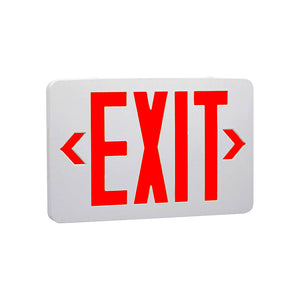
- Letter dimension: “EXIT” letter height ≥ 6 in (152 mm); stroke width ≥ 3/4 in (19 mm). Arrows minimum 1 inch width.
- Viewing distance: Recognizable at 100 ft (30.5 m) under ambient indoor conditions.
- Viewing angle: Maintain readable brightness across required horizontal and vertical viewing angles; no hot‑spots or dark zones.
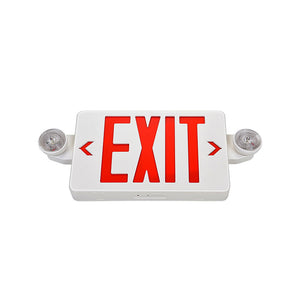
- Color performance: Red or green legend; consistent color output in both AC and battery mode.
3. Electrical & LED Source Parameters
- LED operating power: Low standby power draw for normal continuous operation.
- LED service life: Rated LED lifetime (L70), typically ≥ 50 000 hours. LED failure shall not disable emergency function.
- Temperature operating range: Operate correctly within rated ambient temperature range (indoor: usually 0 °C ~ +50 °C). For garages / cold spaces select extended‑temperature models.
4. Environmental & Mechanical Performance
- Ingress Protection (IP rating): Dry‑location for interior spaces; higher IP for damp / wet locations (parking garages, covered exterior exits). Standard indoor units are not for wet exposure.
- Impact resistance: Housing and lens impact performance for public‑area installation, to resist accidental blows and vandalism.
- Mounting compatibility: Wall‑mount, ceiling‑suspended, edge‑lit, dual‑face mechanical performance; proper structural load for mounting hardware.
5. Safety & Compliance‑Related Performance
- UL 924 listed performance: Compliance covers over‑charge protection, short‑circuit resistance, thermal stability under fault conditions.
- Leakage current, dielectric strength: Pass electrical safety test requirements of UL 924.
- Self‑test function (optional but widely specified): Automated monthly / annual self‑diagnostic test with fault indication; simplifies code‑required inspection records.
Quick summary checklist of core performance parameters
- 90 min minimum emergency runtime
- ≤10 s automatic transfer to battery backup
- ≥5 fc face illumination (AC & battery mode)
- Letter size: 6‑in height, ¾‑in stroke minimum
- 100 ft recognition distance
- Rated operating temperature matching site environment
- Suitable IP rating for dry / damp location
- UL 924 listed electrical safety performance
- Support required monthly & annual testing
How to Ensure Visual Specifications of Code‑Compliant LED Exit Signs Meet Requirements
Visual compliance follows NFPA 101, OSHA 29 CFR 1910.37, UL 924 and local AHJ requirements. Visual performance must be satisfied in both normal AC‑powered mode and battery emergency backup mode.
1. Verify legend size and stroke dimensions
- Letter height of “EXIT”: minimum 6 inches (152 mm).
- Letter stroke width: minimum 3/4 inch (19 mm).
- Directional arrows: arrow shaft minimum 1‑inch width.
- For running‑man pictogram exit signs: follow NFPA 101 pictogram dimension standards instead of text‑based EXIT letter rules.
Action: Check product datasheet and physical label; do not rely only on product photos. Measure sample units if possible.
2. Confirm face illumination brightness
- Minimum 5 foot‑candles (54 lux) across the sign face, measured on the legend surface. This requirement applies for AC power and at the end of the 90‑minute battery emergency runtime.
- No dark spots, uneven brightness, or excessive glare.
Action: Review UL 924 test report or manufacturer photometric data. On‑site verification can use a light meter.
3. Check recognition distance and viewing angle
- Text shall be identifiable from 100 ft (30.5 m) under typical indoor ambient lighting.
- Maintain readable brightness across the full horizontal and vertical viewing range for the mounting position. Edge‑lit LED signs must meet the same viewing‑angle rules.
Action: Confirm datasheet lists rated viewing distance and viewing angle. Avoid narrow‑beam units for long corridors.
4. Legend color and contrast
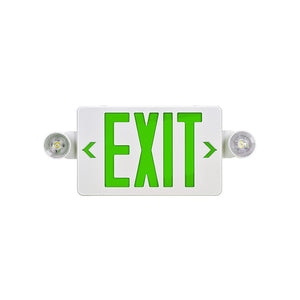
- Permitted colors: red or green legend. Some jurisdictions allow only one color; confirm with local fire marshal / AHJ.
- High contrast between symbol/letter and background. Color output cannot dim or shift drastically when switching from AC mains to battery power.
5. Installation‑related visual requirements (critical for compliance)
Even if the sign itself meets factory specs, improper installation will break visual compliance:
- Mount height: Typically the top of the sign ≤ 96 in (2.44 m) above finished floor; follow local ADA and fire codes.
- No obstructions: Keep the entire sign face free from pipes, racks, banners, decorations, storage or signage blocking sightlines.
- Positioning: Install so the exit sign is visible from all directions along the egress path, at turns and corridor intersections. Use dual‑face signs where viewers approach from two sides.
- Continuous illumination: The sign must stay lit at all times when the building is occupied.
6. Document and third‑party validation
- Only accept units UL 924 listed. The listing covers visual‑performance testing under emergency battery conditions.
- Require manufacturer specification sheets stating letter size, illumination value, viewing distance and color performance.
- If the AHJ requests evidence, provide UL listing information and photometric test data.
7. On‑site acceptance check list
☑ Legend dimensions meet minimum height and stroke‑width ☑ Illumination ≥5 fc in AC mode and after 90‑min battery discharge ☑ Recognizable at rated viewing distance, no dark zones ☑ Acceptable legend color approved by local authority ☑ No physical obstructions blocking the sign face after installation ☑ Remains clearly readable when running on battery backup
LED exit signs have different requirements for different installation environments
Yes. Code‑compliant LED exit signs (per UL 924, NFPA 101, IBC) have differentiated requirements based on installation environments. A standard indoor dry‑location unit cannot be used in damp, wet, cold, high‑temperature or vandal‑prone spaces. Below are the key environmental‑driven differences:
1. Dry indoor environments (offices, retail, classrooms)
This is the most common application.
- Use standard dry‑location rated LED exit signs.
- Operating temperature range: generally 0 °C ~ +50 °C.
- No special IP rating required; basic dust resistance.
- Standard plastic or metal housing is acceptable.
- Dual‑voltage input (120 V / 277 V AC).
2. Damp locations (covered parking garages, stairwells, utility rooms)
Damp locations have moisture, condensation but no direct rain splash.
- Must be rated for damp‑location use (marked on UL 924 listing).
- Higher IP rating (typically IP40 or above) against moisture condensation.
- Internal components must resist corrosion from humidity.
- Standard indoor dry‑location signs are not permitted here, condensation will damage batteries and electronics.
- Confirm temperature rating: parking garages may see low winter temperatures.
3. Wet locations (exposed outdoor exits, open‑air walkways)
Subject to rain, splashing water.
- Require official wet‑location rating in UL 924 listing.
- Higher IP rating (IP65 or equivalent), sealed housing, gaskets to prevent water ingress.
- Battery and circuit boards must be fully protected against rain and spray.
- Ordinary indoor or damp‑location signs cannot be deployed.
4. Extreme temperature environments
Cold storage areas, unheated garages, high‑heat mechanical rooms:
- Standard batteries will degrade or fail outside their rated temperature window.
- Select units with extended‑temperature rated batteries and electronics.
- Cold‑environment models: operate down to −20 °C or lower.
- High‑temperature models: withstand elevated ambient heat.
- Critical note: the mandatory 90‑minute emergency runtime must still be achieved at the site’s extreme operating temperature. Standard batteries will not deliver full runtime in very cold conditions.
5. Vandal‑prone / high‑abuse environments (corridors in schools, prisons, public lobbies)
- Require impact‑resistant, vandal‑resistant housing and shatter‑proof lens.
- UL 924 includes impact test criteria for abuse‑rated models.
- Thin, fragile edge‑lit units are generally unsuitable. Metal housings are preferred.
6. Hazardous classified locations (chemical storage, explosive‑risk areas)
- Standard commercial exit signs are prohibited.
- Must use UL‑listed hazardous‑location rated units, compliant with relevant NEC classes and divisions for flammable vapors or dust.
7. Special mounting‑related environmental differences
Even within indoor dry spaces, mounting position imposes requirements:
- High‑ceiling atriums: ceiling‑suspended / pendant‑mount models; must maintain required viewing distance and viewing angle.
- Corridor intersections: dual‑face exit signs needed for multi‑direction visibility.
- Low‑ceiling narrow passageways: select slim profile while maintaining full visual performance.
Key code takeaway
A UL 924 listing alone is not enough. You must check whether the listing includes the correct location rating (dry / damp / wet) and operating temperature range matching the actual site. Misapplication of a dry‑rated sign in damp or cold space will cause battery failure, shortened service life, and non‑compliance even if the sign itself is UL‑listed.
Quick checklist for environment‑related selection
☑ Confirm dry / damp / wet rating matches site ☑ Verify operating temperature covers site minimum and maximum temperatures ☑ Ensure 90‑minute battery runtime is guaranteed at extreme site temperatures ☑ Vandal‑abuse rating for public high‑risk areas ☑ Hazardous‑location certification if explosive atmosphere exists ☑ Appropriate mounting style for ceiling height and sight‑line conditions.
How to Choose Code‑Compliant LED Exit Signs
Selecting code‑compliant LED exit signs requires checking certifications, performance parameters, visual specifications, power‑backup features, installation adaptability and local authority requirements, mainly complying with UL 924, NFPA 101, OSHA 29 CFR 1910.37 and IBC for North‑American projects.
1. Verify Mandatory Safety Certifications
- Confirm the physical product carries a UL 924 listed mark, not merely marketing descriptions. UL 924 covers emergency lighting, battery performance, electrical safety and endurance testing.
- Check compatibility with local codes: NFPA 101 (Life Safety Code), IBC (International Building Code), and OSHA workplace safety rules. Local AHJ (Authority Having Jurisdiction) may enforce stricter requirements than national standards.
- Avoid counterfeit listings; validate the UL listing number via the official UL Product iQ database when in doubt.
2. Check Emergency Power‑Backup Performance
- Minimum 90‑minute battery runtime: When mains power fails, the built‑in rechargeable battery must keep the sign fully illuminated for at least 90 minutes at rated brightness.
- Automatic power transfer: Switch to battery backup within 10 seconds of utility power loss, no manual operation needed.
- Equipped with a visible battery charging indicator light.
- Support required routine tests: monthly 30‑second functional test, annual full‑duration 90‑minute discharge test (code‑mandated for documentation).
- Most commercial LED exit signs accept dual‑voltage input (120 V / 277 V) to match standard building electrical systems.
3. Visual & Legibility Requirements (NFPA 101 / OSHA)
- Letter size: “EXIT” letters minimum 6 in (152 mm) height, stroke width minimum 3/4 in (19 mm); directional arrows at least 1 inch wide.
- Visibility: Recognizable from 100 feet (30.5 m) under normal conditions. Surface illumination ≥ 5 foot‑candles (54 lux) both in normal and emergency mode.
- Color: Red or green lettering is permitted; confirm the allowed color with local fire officials, as jurisdictions vary.
- High contrast between lettering and background; pictogram‑style signs with the running‑man icon are also acceptable per NFPA 101.
- The sign shall stay continuously illuminated whenever the building is occupied.
4. Select Proper Sign Type & Mounting Style
Choose mounting options matching site conditions:
- Wall‑mount: Most common, installed above exit doors.
- Ceiling‑mount / suspended: For high‑ceiling lobbies and atriums.
- Edge‑lit LED: Slim profile; must satisfy identical UL 924 and brightness standards as conventional LED units.
- Dual‑face: For corridors where the exit path can be viewed from two directions.
Note: Photoluminescent glow‑in‑the‑dark signs cannot fully replace electrically powered LED exit signs in most occupied buildings.
5. Environmental & Physical Specifications
- Select suitable ingress protection ratings for damp locations (stairwells, parking garages, exterior covered exits). Standard indoor models are for dry‑use only.
- Robust, impact‑resistant housing; avoid easily‑breakable lens materials for public‑area installations.
- ADA‑compliant options are required in many regions for accessibility, including proper mounting height and non‑glare output.
6. Match Local Code & Occupancy Rules
- Exit‑sign placement rules: Install at every exit doorway, along egress corridors, direction‑change points, and stairwell exits where escape routes are not obvious.
- Different occupancy types (offices, retail, healthcare, assembly spaces) have special NFPA 101 amendments. Always consult your local fire marshal or AHJ before purchase and installation.
7. Maintenance Considerations
- Review product manuals for battery replacement cycles and spare‑part availability. LED sources have long service life, yet rechargeable batteries degrade over years and need periodic replacement.
- Confirm the unit allows convenient monthly and annual testing as required by fire codes.
Quick Compliance Checklist
UL 924 listing mark on product ,≥ 90‑minute emergency battery runtime , Auto switch‑over during power outage , 6‑inch minimum letter height, ¾‑inch stroke , ≥ 5 fc face illumination , Appropriate mounting style for location , Matches local fire‑marshal / AHJ requirements


