

LED street lighting cuts municipal costs through several compounding mechanisms. Here's a breakdown with real-world data.
1. Dramatically Lower Energy Consumption
This is the single biggest savings driver. LEDs convert electricity to light far more efficiently than traditional high-pressure sodium (HPS) or mercury vapor lamps:
- Typical energy reduction: 50–80% when replacing HPS with LEDs, and up to 80% when combined with smart dimming controls.Northeast Grouptl.intelligentlampsfactory.com
- A 400W HPS lamp can often be replaced by a 90W LED delivering equal or better light output. In Baoshan Longyang District (China), this swap cut per-lamp annual electricity use by 3,000 kWh, reducing total city consumption by 5.87 million kWh and saving over $350,000 annually.Hylele
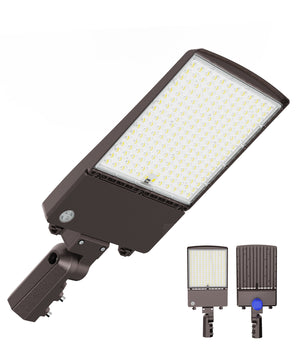
- Current high-efficacy LEDs reach 200 lm/W, up from ~130 lm/W for first-generation LEDs — meaning a 65W fixture now does what a 100W fixture did a few years ago, adding another 35% energy savings on top of earlier LED generations. JCELighting Co.,Ltd
Concrete examples:
| City | Scale | Annual Savings | Energy Reduction |
|---|---|---|---|
| Los Angeles, CA | 215,000 lights | ~$10 million | ~63% |
| Knoxville, TN | 29,500 lights | $2.2 million | 70% |
| Cambridgeshire, UK | County-wide | £1.5 million | Streetlighting drops from 53% to 33% of council electricity use |
| Liepāja, Latvia | City-wide | €141,500 | Consumption falls from 1,003 MWh to 250 MWh |
2. Far Lower Maintenance Costs
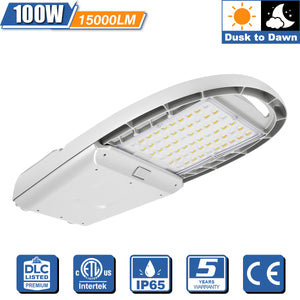
Traditional HPS lamps need replacement every 2–4 years. Premium LED luminaires carry L90 ratings exceeding 100,000 hours — roughly 20+ years of service before lumen depreciation demands replacement.tl.intelligentlamps factory.
This means:
- Fewer lamp replacements and truck rolls — labor, equipment, and traffic management costs all drop.
- Washington, D.C. reported a 49% reduction in repair calls after LED conversion.ZhongChuang Lighting
- Many fixtures come with 10-year warranties guaranteeing 70% light output at 100,000 hours, shifting replacement risk to the vendor.ZhongChuang Lighting
3. Smart Controls Add a Second Layer of Savings
Networked LED systems (IoT-enabled) allow remote dimming, scheduling, and fault detection — adding roughly 40% additional savings on top of the LED conversion alone.tl.intelligentlampsfactory.com
- Adaptive dimming: Lights dim during low-traffic hours (e.g., after midnight). Hillsboro, OR cut energy use by up to 70% during dimming periods.Luminate Lighting Group
- Fault detection: "Dayburner" failures (lights stuck on during the day) are eliminated through remote monitoring. Milton Keynes, UK eliminated dayburner failures entirely while achieving 60%+ energy savings.iFactory
- A deployment across 30,000+ lights in Italy, Lithuania, and Turkey achieved 35–55% annual savings depending on the dimming profile.

4. Favorable Economics and Payback
- Simple payback periods: 3–10 years depending on electricity rates, project scale, and whether maintenance savings are included. High-efficacy LEDs with controls can pay back in 3–6 years.jnsxzm.comZhongChuang Lighting
- Los Angeles achieved a 6-year payback; Seattle achieved 7 years (including O&M savings).U.S. Department of Energy's Office of Energy Efficiency and Renewable Energy (EERE)
- Over a 15-year horizon, a mid-sized city can realize a net present value in the millions — one analysis estimated $1.47 million at a 4% discount rate. JCELighting Co.,Ltd
- Many municipalities use Energy Savings Performance Contracts (ESPC) or utility financing, requiring no upfront capital and paying for the retrofit from the resulting savings.U.S. Department of Energy's Office of Energy Efficiency and Renewable Energy (EERE)
5. Ancillary Cost Reductions
- Reduced carbon emissions and compliance costs: 70–80% energy cuts translate directly to lower greenhouse gas emissions, helping municipalities meet climate targets and avoid carbon-related fees.Northeast Group
- Better light quality reduces indirect costs: LEDs produce directional, uniform white light that improves visibility and can reduce accidents and security incidents — though these are harder to quantify directly.
- Scalability: A phased approach (prioritizing arterial roads, downtown, and high-crime areas first) lets municipalities validate savings before full deployment. JCELighting Co.,Ltd
Bottom line: For a typical municipality, LED conversion reduces street lighting electricity bills by 50–80%, cuts maintenance expenses by roughly half, and pays for itself within 3–10 years — after which the savings flow directly to the budget. Adding smart controls extends savings further while reducing operational overhead


