

The distance an LED flood light can shine varies significantly, but common compact models generally reach 200 to 250 feet, while high-performance professional units can exceed 1,800 feet.
The actual "throw" distance depends almost entirely on the specific product's design and its intended use. Here are a few real-world examples to give you a sense of the range:
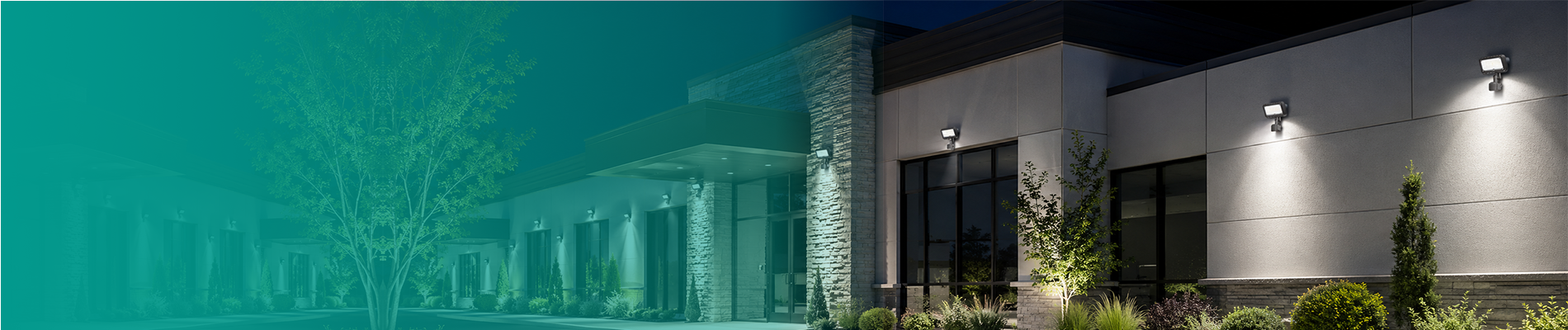
Typical Shine Distances by Product Type
-
Compact / DIY Flood Lights: Small, portable models designed for yards or job sites typically project light around 200 to 250 feet. For instance, a 2,200-lumen unit is rated for 252 feet, and a slightly dimmer 1,700-lumen version is rated for 209 feet.
-
Professional / Industrial Flood Lights: High-output luminaires built for large-scale projects (like bridges or stadiums) can throw light much farther. A premium 300W model with a narrow 3° beam angle can reach targets up to 1,852 feet (564 meters) away.
-
Work Lights / Mid-Range: Wired area floodlights for construction sites often have multiple brightness settings. One 8,000-lumen model can illuminate up to 135 meters (about 443 feet) at its highest setting.

What Determines the Distance?
If you want to estimate how far a specific light will shine, look for these two key specs:
-
Beam Angle: This is the most critical factor. A narrow beam (like 3° or 30°) concentrates light into a tight, powerful ray that travels much farther. A wide beam (like 120°) spreads light over a larger area but sacrifices throw distance.
-
Power and Lumens: Generally, a higher wattage and lumens rating will provide more "punch," but only if paired with an appropriate beam angle. A 400W light with a 30° beam can reach 100 meters, while the same power with a 120° beam is better for closer, broader coverage.
Amperage at common voltages
- 120V (standard US) → 300 ÷ 120 = 2.5 A
- 220–240V (EU/Asia) → 300 ÷ 220 ≈ 1.4 A
- 24V low-voltage LED → 300 ÷ 24 = 12.5 A
- 12V low-voltage LED → 300 ÷ 12 = 25 A
Recommended wire
- 120V / 220V AC (your likely case in the US): 14 AWG is the standard and more than sufficient (it's rated ~15A). Even 16 AWG would physically carry 2.5A, but 14 AWG gives you margin and matches standard lighting circuits.
- 24V setup: Use at least 10 AWG (and thicker if the run is long), because 12.5A needs heavier cable and voltage drop matters a lot at low voltage.
- 12V setup: You need 6–8 AWG — 25A is a lot, so keep the run short and thick.
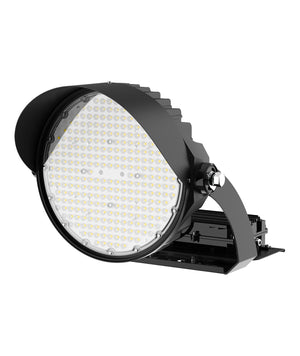
Key practical notes
- Voltage drop: For a 120V light, distance is rarely an issue. For 12V/24V runs over ~5–10 meters, you must upsize the wire or you'll lose brightness to voltage drop.
- Code/compliance: Always match the wire to your local electrical code (e.g., NEC in the US) and to the breaker rating, not just the load. A 15A breaker on a lighting circuit wants at least 14 AWG regardless of the 2.5A draw.
- Outdoor/wet locations: Use waterproof, UV-rated cable (e.g., suitable outdoor or direct-burial rated) and install with proper junction boxes / waterproof connectors.
For a 300W LED flood light, a 1.0mm² or 1.5mm² copper cable is typically suitable for the majority of installations. The exact requirement depends on your local voltage and the length of the cable run.

What the Numbers Tell Us
The amount of current a 300W light draws is the key factor. It changes based on your mains voltage:
-
At 120V (North America): The current draw is about 2.5 to 2.6 amps . A 1.0mm² (approx. 18 AWG) cable is more than sufficient for this load at short distances.
-
At 220-240V (UK/Europe/Australia): The current is lower, around 1.25 to 1.55 amps . In this case, a thinner 1.0mm² cable is perfectly safe.

Cable Length and Real-World Specs
While the current draw is low, you also need to consider voltage drop if the cable run is very long (over 15–20 meters).
-
Manufacturer Standard: Many 300W floodlights actually come pre-wired with 1.0mm² cable from the factory, confirming it is suitable for typical installations .
-
Longer Runs: If your cable run exceeds 20 meters, it is good practice to step up to 1.5mm² to minimize voltage drop and ensure the light receives full power.
A Note on Fusing
For a single 300W light, a 3 Amp or 5 Amp fuse is usually recommended, especially to handle the brief inrush current when the light first turns on
Call +1 718-688-9188 to speak with a US-based lighting professional expert or browse LED Flood Lights at www.jcelighting.com.


