

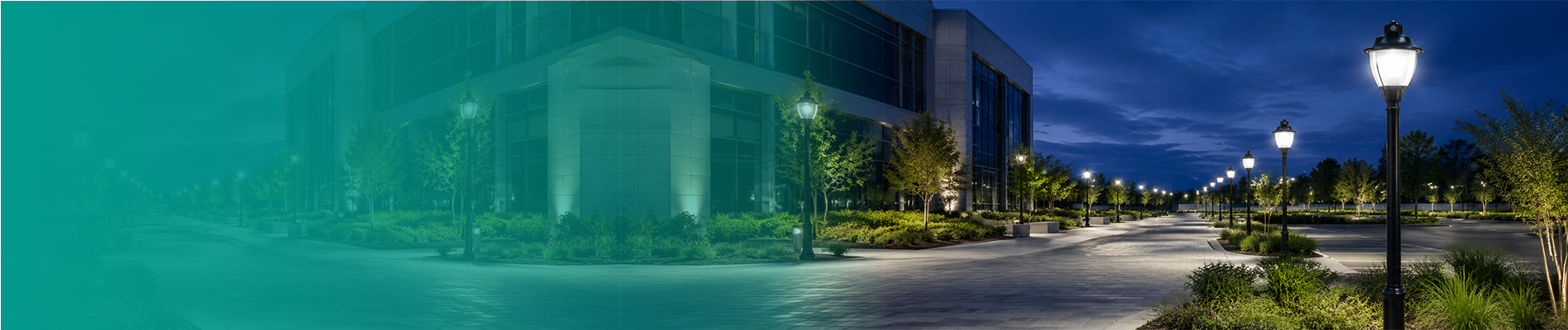
LED post top lights are outdoor lighting fixtures designed to mount directly onto vertical poles—typically ranging from 7 to 20 feet high. They direct light downward and outward, providing human-scale illumination for pedestrian and vehicular zones while enhancing the aesthetic appeal of outdoor landscapes.
Key Features & Characteristics
-
Pedestrian-Scale Design: Unlike high-mast highway or shoebox parking lot lights that sit on tall poles, post top lights are positioned closer to ground level (often eye level or slightly above) to create comfortable, welcoming light for people on foot.
-
360-Degree & Directional Light Distribution: Many post top lights offer omnidirectional (360°) lighting, while modern optical lenses allow for targeted distribution (e.g., along a walkway or path) to minimize light pollution and glare.
-
Architectural Versatility: They come in a wide array of decorative designs, including classic lantern styles, acorn globes, colonial aesthetics, and sleek modern or contemporary forms.
Where Are They Used?
LED post top fixtures are commonly installed across residential, commercial, and municipal environments:
-
Parks & Plazas: To light gathering areas and public squares safely.
-
Walkways & Pathways: To illuminate sidewalks, garden paths, and walking trails without blinding pedestrians.
-
Educational & Corporate Campuses: For courtyard illumination, exterior building perimeter lighting, and walkways between buildings.
-
Downtown Streetscapes & Residential Subdivisions: Along street curbs, HOA communities, and downtown areas.
Why Switch to LED Post Tops?
Traditional post top lights used High-Intensity Discharge (HID) technology—such as Metal Halide (MH) or High-Pressure Sodium (HPS) lamps. Modern LED alternatives offer several major advantages:
-
Energy Savings: LED post tops consume 35% to 80% less energy than older HID fixtures while generating equal or superior illumination.
-
Reduced Maintenance: LEDs last anywhere from 50,000 to over 100,000 hours, eliminating frequent bulb and ballast replacements on outdoor poles.
-
Better Uniformity & Color Quality: LEDs deliver even, crisp light with high Color Rendering Index (CRI), improving visibility and safety at night.
-
Smart Control Compatibility: Many modern LED post top fixtures feature photocells (dusk-to-dawn sensors), motion sensors, and dimming capabilities.
Two Main Types of Upgrades
When upgrading to LED post top lighting, there are two primary approaches:
-
Complete LED Fixture Replacement: Replacing the entire fixture head on top of the pole. This gives full control over optical distribution, energy efficiency, and modern design.
-
LED Post Top Retrofit Lamps (Corn Bulbs): Replacing just the bulb inside an existing traditional fixture by bypassing the internal ballast. This is a cost-effective way to convert to LED while keeping decorative vintage housing.
Residential post light (lumens per fixture)
- Garden / quiet path, decorative glow: 100–300 lm (many solar post lights fall here)
- Front walk / pedestrian path (safe walking): 300–500 lm is the sweet spot
- Driveway / main entry post light: 500–800 lm; wider/long driveways can go up to 1000 lm
- Security-focused gate/post light: 800–1000+ lm (avoid over-bright if you have neighbors; shielded downward light is better)
Quick extra tips
- Pick 2700K–3000K warm white for most home post lights; it feels welcoming and cuts glare/light pollution better than cool white
- Prefer fixtures that shine downward, not straight out or upward (dark-sky friendly, less glare)
- Multiple moderate-lumen post lights spaced apart usually look nicer and light more evenly than one extremely bright post light
- Solar post lights are often 100–250 lm: great for decoration, but usually too dim for a main driveway light
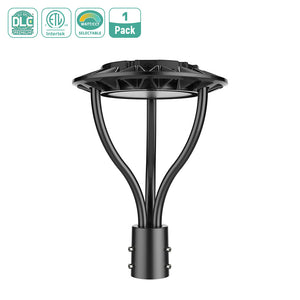
When selecting the right brightness for a post light (outdoor lamp post), the goal is to balance safety and visibility without causing harsh glare or light pollution.
For outdoor post lights, brightness is measured in lumens (total light output) rather than watts:

Recommended Lumens by Purpose
-
General Accent & Path Illumination (100 – 300 Lumens):
-
Best for: Soft ambiance, garden post lights, or short walkways.
-
Feel: Creates a subtle, decorative glow that guides foot traffic without overpowering the landscape.
-
-
Standard Walkway & Entry Lighting (300 – 700 Lumens) — Most Popular Choice
-
Best for: Front yards, driveways, and main entry pathways.
-
Feel: Provides clear visibility to see step hazards, house numbers, and walking paths clearly. This is equivalent to a traditional 40W to 60W incandescent bulb (or a 5W–8W LED).
-
-
High Security & Large Driveways (700 – 1,200 Lumens):
-
Best for: Long driveways, dark corners, or large open yards requiring broad coverage.
-
Feel: Bright and highly visible. Use opaque, frosted, or seeded glass fixtures to prevent blinding glare at eye level.
-
Key Considerations for Post Lights
-
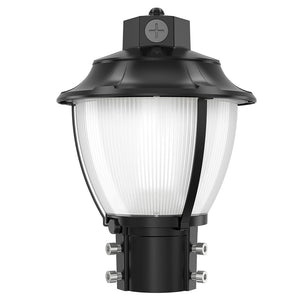
Eye-Level Glare: Because post lights sit higher than ground path lights (often between 5 and 7 feet off the ground), direct bare bulbs can shine straight into people's eyes. Choose fixtures with frosted glass, textured/seeded glass, or downward-facing shades.
-
Color Temperature (Kelvin):
-
2700K – 3000K (Warm White): Best for residential settings. It feels cozy, welcoming, and warm.
-
4000K (Cool White): Best for security-focused lighting, but can feel stark or commercial.
-
-
Dark-Sky Compliance: If you live in a community with light pollution guidelines, opt for "fully shielded" post lights that direct light downward onto the ground rather than out or up.
Call +1 718-688-9188 to speak with a US-based lighting professional expert or browse LED post top lights at www.jcelighting.com.


