Free Shipping for all orders over $100
5-Year Warranty | DLC/UL/ETL
24H Quick Ship from USA Warehouses
TrustScore 4.9丨3214 Trustpilot reviews

5 Products


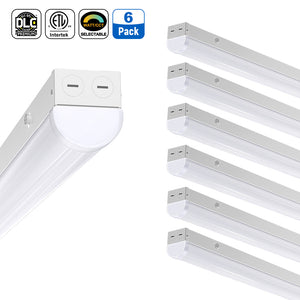
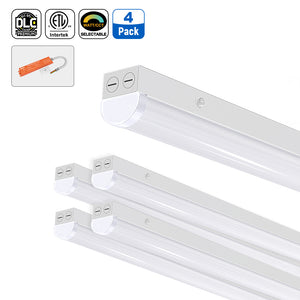
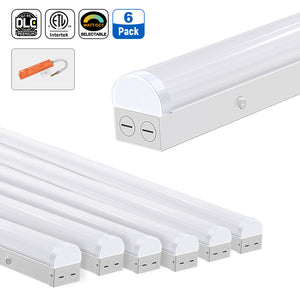
JCE Lighting LED linear strip lights are low-profile commercial fixtures designed for bright, uniform illumination in offices, warehouses, retail aisles, hallways, workshops, storage rooms, schools, garages, and utility areas. Available in 4ft and 8ft options, these commercial LED strip light fixtures are ideal for replacing fluorescent strip lights or upgrading older utility lighting systems with more efficient, lower-maintenance LED technology.
Choose from wattage selectable, CCT selectable, dimmable, sensor-ready, and emergency backup linear strip lights for different project requirements. With 120–277V commercial voltage options, ETL/cETLus and DLC listed models, and a 5-year warranty, JCE linear strip lights are built for contractors, facility managers, and commercial lighting retrofit projects.
Use 4ft LED linear strip lights for smaller rooms, utility areas, and lower mounting heights. Use 8ft LED linear strip lights for larger spaces, long aisles, warehouses, and open commercial areas.
Field-selectable wattage and color temperature help contractors adjust brightness and light color on site without ordering multiple fixture models for the same job.
DLC and ETL listed commercial strip lights support code-conscious installations and may help eligible projects qualify for local utility rebate programs.
The right linear strip fixture depends on fixture length, lumen output, wattage, CCT, dimming, mounting method, ceiling height, emergency lighting needs, and whether the project is a retrofit or new construction installation.
| Selection Factor | What to Check | Recommended Choice |
|---|---|---|
| Fixture Length | Measure the existing fixture or required coverage area. | Choose 4ft linear strip lights for smaller rooms and 8ft linear strip lights for long aisles, warehouses, and larger spaces. |
| Brightness / Lumens | Match lumen output to ceiling height, task level, and room size. | Use lower wattage settings for corridors and storage rooms; use higher output for workshops, warehouses, and retail aisles. |
| Color Temperature | Select the CCT that best fits the application. | 3500K–4000K works well for offices and schools; 4000K–5000K is common for warehouses, retail, garages, and task areas. |
| Controls | Check dimming, occupancy sensor, and building control compatibility. | Choose 0–10V dimmable or sensor-ready LED linear strip lights for energy-saving commercial control systems. |
| Emergency Backup | Confirm if the space requires emergency egress lighting. | Use emergency backup linear strip lights in corridors, stair access areas, exits, and code-required zones. |
| Environment | Check whether the location is dry, damp, dusty, or exposed to moisture. | Use standard linear strip lights for indoor dry/damp spaces; use vapor tight fixtures for harsher or wet environments. |
Both 4ft and 8ft LED linear strip lights are used for commercial and industrial indoor lighting. The best choice depends on the existing fixture length, mounting height, spacing, and desired light distribution.
| Fixture Size | Best For | Main Advantages |
|---|---|---|
| 4FT LED Linear Strip Lights | Offices, storage rooms, utility spaces, small workshops, classrooms, corridors, and low ceilings. | Flexible placement, easier handling, good for replacing common 4ft fluorescent strip fixtures. |
| 8FT LED Linear Strip Lights | Warehouses, long aisles, garages, retail backrooms, manufacturing areas, and large open spaces. | Higher lumen output, fewer fixtures needed in many layouts, better coverage for long continuous runs. |
Use 8ft LED linear strip lights for aisles, storage racks, stockrooms, and general warehouse lighting where long, uniform coverage is needed.
Install 4ft or 8ft commercial strip lights in open offices, service areas, copy rooms, mechanical rooms, and utility spaces.
Linear strip fixtures provide clean, continuous illumination for retail aisles, stockrooms, back-of-house areas, and product handling spaces.
Bright LED strip light fixtures improve visibility for automotive work, tool benches, maintenance areas, and general task lighting.
Use linear strip lights in classrooms, hallways, supply rooms, labs, and administrative spaces that need reliable ceiling-mounted lighting.
Replace fluorescent strip fixtures with LED linear strip lights to reduce lamp changes, improve light quality, and lower operating costs.
LED linear strip lights are often compared with wraparound lights, shop lights, vapor tight lights, and linear high bays. Each fixture type is designed for a different lighting environment.
| Fixture Type | Best Application | When to Choose It |
|---|---|---|
| LED Linear Strip Lights | Warehouses, offices, garages, corridors, storage areas, and utility rooms. | Choose when you need a slim, surface-mounted linear fixture for general commercial lighting. |
| LED Wraparound Lights | Offices, schools, stairwells, hallways, and utility rooms. | Choose when you want a wider lens and softer distribution around the fixture body. |
| LED Vapor Tight Lights | Parking garages, wash-down areas, damp rooms, dusty environments, and industrial locations. | Choose when moisture, dust, or harsh conditions require a sealed fixture. |
| LED Shop Lights | Garages, workshops, benches, and small work areas. | Choose when you need plug-in or task-focused shop lighting instead of hardwired commercial fixtures. |
| Linear High Bay Lights | High-ceiling warehouses, gyms, manufacturing plants, and distribution centers. | Choose when mounting height is much higher and high-output industrial lighting is required. |
Fixture spacing depends on mounting height, lumen output, beam distribution, room reflectance, and the required foot-candle level. As a basic planning rule, keep spacing consistent and avoid placing fixtures too far apart, which can create dark spots between rows.
| Application | Common Goal | Planning Tip |
|---|---|---|
| Warehouse Aisles | Bright, continuous visibility along racks and walkways. | Use 8ft linear strip lights or higher wattage settings for longer runs and higher ceilings. |
| Workshops & Garages | Strong task visibility with fewer shadows. | Install fixtures parallel to work areas and use higher CCT options such as 4000K or 5000K. |
| Office Utility Areas | Comfortable general illumination. | Use moderate wattage settings and 3500K or 4000K for a balanced commercial look. |
| Corridors & Hallways | Safe wayfinding and even light distribution. | Use lower wattage settings and consistent spacing to avoid over-lighting narrow areas. |
| Retail Backrooms | Clear visibility for inventory and product handling. | Use 4ft or 8ft strip lights depending on aisle length, shelving, and ceiling layout. |
Not sure whether your project needs 4ft or 8ft fixtures, emergency backup, sensor base, 3CCT/5CCT selectable models, DLC listed fixtures, or a specific lumen package? Contact JCE Lighting for product selection, bulk pricing, and commercial project support.
Call: +1 718-688-9188
Email: Contact@jcelighting.com
An LED linear strip light is a slim, surface-mounted commercial light fixture used for general illumination in warehouses, offices, garages, retail aisles, hallways, workshops, and utility spaces.
A 4ft LED linear strip light is commonly used in smaller rooms, utility areas, and lower ceilings. An 8ft LED linear strip light provides longer coverage and higher lumen output for warehouses, long aisles, garages, and larger commercial spaces.
Yes. LED linear strip lights are commonly used to replace fluorescent strip fixtures in commercial and industrial buildings. Before retrofitting, confirm fixture length, voltage, wiring method, mounting surface, and local code requirements.
3500K and 4000K are popular for offices, schools, and general commercial spaces. 4000K and 5000K are often used for warehouses, garages, workshops, stockrooms, and task areas where brighter, cooler white light is preferred.
Many commercial LED linear strip lights support 0–10V dimming. Always check the product specifications and confirm compatibility with the dimmer, sensor, or building control system.
Choose a vapor tight LED fixture instead of a standard linear strip light when the location is exposed to moisture, heavy dust, wash-down conditions, parking garage environments, or harsher industrial conditions.
DLC listed or DLC Premium LED linear strip lights may qualify for certain utility rebate programs, but rebate requirements vary by state, utility provider, and project type. Always check your local utility rebate program before ordering.
LED linear strip lights are commonly used in warehouses, offices, retail aisles, schools, garages, workshops, utility rooms, storage areas, hallways, backrooms, and commercial retrofit projects.
Note: Final fixture quantity, spacing, and light levels should be confirmed by a qualified lighting designer or electrician based on ceiling height, room size, reflectance, photometric data, and local code requirements.


